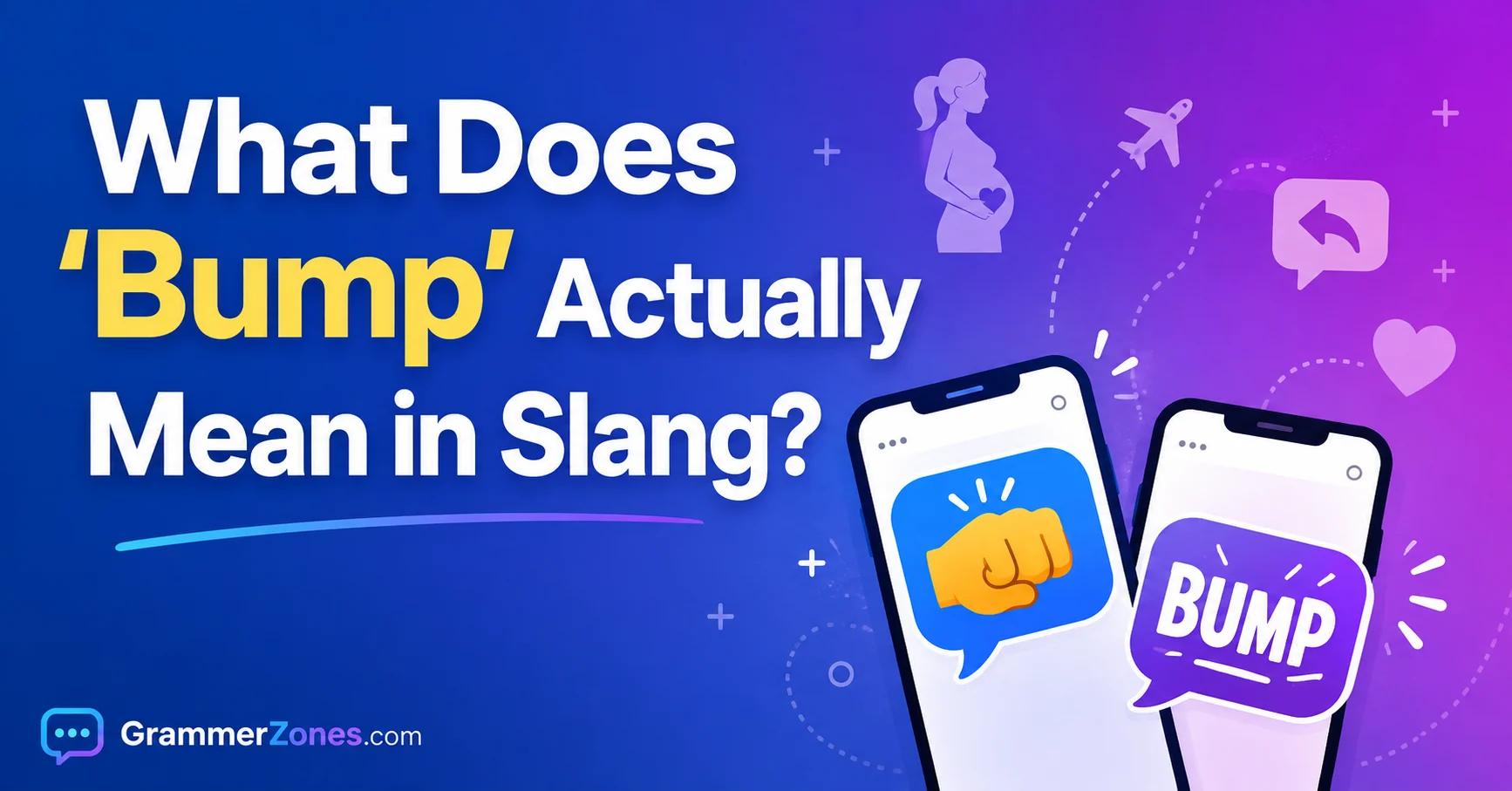
Quick answer: Bump is slang for pushing something back into attention, reviving a quiet thread, nudging a message, giving someone a fist bump, or referring to a pregnancy belly. The exact meaning depends entirely on where you saw it, which is why the same three-letter word can mean five completely different things in the same week.
I first got asked about this word by a friend who’d just been told her Reddit comment bumped a three-year-old thread back to the front page and she had no idea what that meant or if she’d done something wrong.
That confusion is more common than you’d think. Bump is short, casual, and used constantly online, but it rarely means the same thing twice.
Sometimes it’s a greeting. Sometimes it’s a way of saying notice this again. Sometimes it’s medical, sometimes it’s about flights, and sometimes depending on the crowd it’s a coded reference to drug use. That range is exactly why so many people land on this page mid-conversation, trying to figure out which bump they just walked into.
Below is a plain-English breakdown of every major use of the word, sourced from how it’s actually defined and discussed across dictionaries, forums, and everyday conversation not just guessed at.
What Bump Actually Means
The literal meaning comes first: a bump is a small collision, a raised surface, or a light jolt, a bump on the road, a bump on your shin. Every slang meaning below traces back to that same idea of contact or a sudden small rise.
From there, the common slang uses split into a handful of buckets:
- Reviving something replying to an old post or thread just to push it back into view
- Greeting someone a fist bump, used instead of a handshake
- Running into someone an unplanned meeting, I bumped into her at the store
- Getting bumped displaced or rescheduled, most familiar from air travel
- Bumping something up increasing priority, volume, or rank
- A small dose in party or club slang, a quick amount of a substance, usually implied rather than stated outright
Urban Dictionary is often where people go to check these definitions, since its crowd-voted entries tend to track slang faster than traditional dictionaries do. If you search there, you’ll find most of the same categories above, though community definitions vary in tone and can skew toward the drug-related sense more than everyday usage actually does.
Where the Word Came From
The internet didn’t invent bump, but it did give the slang version its current shape. In early 2000s forums, users would literally type bump as a one-word reply just to push a thread back to the top of a list, a trick still used today to keep questions from getting buried.
From forums, the word spread outward. Music culture picked it up (bump that track meaning play it loud). Physical greeting culture adopted the fist bump as a lower-contact alternative to handshakes. And somewhere along the way, it became loosely associated with drug use not because the word itself changed, but because a bump was a convenient, vague way to talk about something people didn’t want to name directly.
Knowing this history actually matters in practice. A parent who spots a bump in their teenager’s messages might assume the worst, when nine times out of ten it’s someone reviving a group chat or reacting to a pregnancy announcement, not anything concerning.
How the Meaning Shifts by Setting
Context does almost all the work with this word. Here’s how it plays out in practice:
In a normal text conversation, bump is usually a gentle nudge, a way of saying did you see this? without sounding pushy.
On social platforms, it’s about visibility. Commenting bump on a post especially in resale or buy-and-sell groups pushes that post back up in the feed and signals renewed interest to other people scrolling past.
At work, it shows up differently again: getting bumped up to a higher-priority project, or a meeting getting bumped to next week. Neither has anything to do with the internet slang sense; it’s closer to moved or elevated.
In gaming, players sometimes use it to describe literally colliding with another character, or use it the same way as social media bumping a clip or stream back into trending visibility.
The common thread across all of these: something is being pushed forward, if that’s a topic, a person, or a priority.
Bump on WhatsApp, Instagram, and TikTok
Each platform has its own flavor of the word.
On WhatsApp, there’s no built-in bump feature; it’s purely conversational, usually meaning bringing this back up since you went quiet.
On Instagram, especially in shopping and resale communities, typing bump in the comments is a known tactic to push a listing higher and signal buyer interest to others.
On TikTok, you’ll most often see it attached to pregnancy content the classic baby bump reveal or in captions hyping up a song or trend, as in let’s bump this, meaning let’s get this trending or turn the energy up.
On Reddit specifically, bump has almost become a small ritual: commenting on an unanswered post is a direct, understood signal to the community and to Reddit’s own sorting that this thread deserves another look.
Bump Outside of Slang: Medical, Physics, and Air Travel
It’s worth separating casual usage from the formal, technical ones, because they don’t overlap.
Medically, a bump refers to a lump, swelling, or raised area on the skin, something worth having a doctor look at if it’s new, painful, or changing shape. This has nothing to do with the internet slang and is one of the most commonly searched non-slang uses of the word.
In physics and data analysis, bump is informal shorthand for a spike or anomaly in an otherwise smooth graph, a small, localized rise that stands out from the surrounding pattern. Scientists and engineers use it casually in conversation, even though it’s not a formal technical term.
In aviation, getting bumped is the official industry language. Airlines use it to describe involuntary or voluntary denied boarding, almost always tied to overbooking and airlines are required to offer compensation in many of these cases, which is worth knowing if it ever happens to you.
Myths Worth Clearing Up
A few misunderstandings follow this word around more than they should.
It doesn’t always mean drugs. That association exists, but it’s one narrow use among many, usually tied to specific party or nightlife contexts, not something that shows up in ordinary conversation.
A baby bump isn’t a medical term. It’s informal, affectionate slang for a visibly pregnant belly; you won’t hear a doctor use the phrase clinically.
Getting bumped isn’t automatically bad news. Being bumped from a flight is inconvenient, sure, but being bumped up in priority, rank, or a queue is the opposite of a genuine upgrade.
Bump on social media doesn’t usually signal conflict. People sometimes confuse it with bumping heads, a much rarer phrase implying disagreement or friction. On its own, bump almost always just means visibility, not confrontation.
Similar Words You Might Reach For Instead
If bump doesn’t quite capture what you mean, a few close alternatives carry similar energy without the ambiguity:
- Nudge a soft reminder, similar to bumping a message
- Revive bringing a stalled conversation or thread back to life
- Boost increasing visibility, the social-media equivalent of a bump
- Dap or pound it alternate phrases for a fist bump
- Upgrade or promote more formal stand-ins for bump up
These words tend to show up in the same conversations as bump because they share overlapping meanings which is exactly why context, not the word alone, tells you what’s actually being said.
How to Respond, Depending on the Situation
- If someone comments on your post, a quick thanks or reaction is all that’s expected.
- If a friend texts bump after being left on read, that’s your cue to go answer whatever they sent earlier.
- If you’re offered a fist bump, just return it with no explanation needed.
- If an airline tells you that you’ve been bumped, ask directly about compensation, rebooking, or travel credit you’re often entitled to something.
- If someone says let’s bump before an outing or activity, they’re inviting energy and momentum matching that tone works better than overthinking the word choice.
Words People Often Confuse With Bump
- Bump vs. ping a ping is a neutral check-in; a bump implies actively pushing something back into relevance.
- Bump vs. poke a poke (especially the old Facebook feature) leans playful or flirty; a bump is more about visibility or contact than flirtation.
- Bump vs. slam bump is light and casual; slam implies force, criticism, or impact, which puts it in a different category entirely.
- Speed bump vs. slang bump a speed bump, literal or metaphorical, refers to a minor obstacle or setback in plans. It’s borrowed from the physical road feature and doesn’t share meaning with the social or forum-based uses.
Bump in Texting, Dating Apps, and Flirty Conversations
This is where the word softens considerably. A light shoulder or hip bump in person or a reference to one in a message is usually playful, not literal. It’s a way of getting someone’s attention warmly, closer to a tease than anything confrontational.
On dating apps specifically, first-time exposure to the word in a match’s message or bio often prompts a quick search for clarity before replying understandably, since tone matters a lot in early conversations. Reading it as flirty rather than blunt is almost always the safer, more accurate interpretation in that setting.
Quick Answers to Common Questions
Does bump always mean something bad?
No. Most of the time it’s neutral or even positive, reviving interest, greeting someone, or getting priority.
Is bumping the same as flirting?
Not inherently, but in texting or dating app contexts, it’s often used playfully rather than literally.
Why do people say bump on Reddit?
To signal that a post deserves more attention or a second look, especially if it’s gone unanswered.
Is getting bumped from a flight the airline’s fault?
Usually, yes it typically results from overbooking, and airlines are generally required to offer compensation.
Conclusion
Bump is proof that a tiny word can carry an outsized amount of meaning. What it signals as a greeting, a nudge, a rescheduled flight, a flirty gesture, a revived conversation depends entirely on where you encounter it and who’s saying it.
The safest approach is simple: look at the context before you assume the worst (or the most dramatic) definition.
Once you know the range from Reddit threads to airport gates to a match’s opening message this word stops being confusing and starts being one more piece of everyday shorthand you can read correctly on the first try.

I’m Olivia Cruz, a content writer at grammerzones.com, specializing in clear, user-friendly blog posts on grammar and modern slang meanings. I focus on simplifying complex terms including drug and gang slang into accurate, easy-to-understand content.