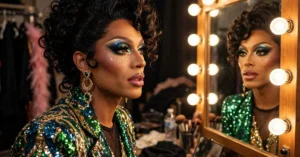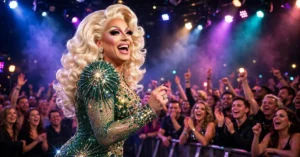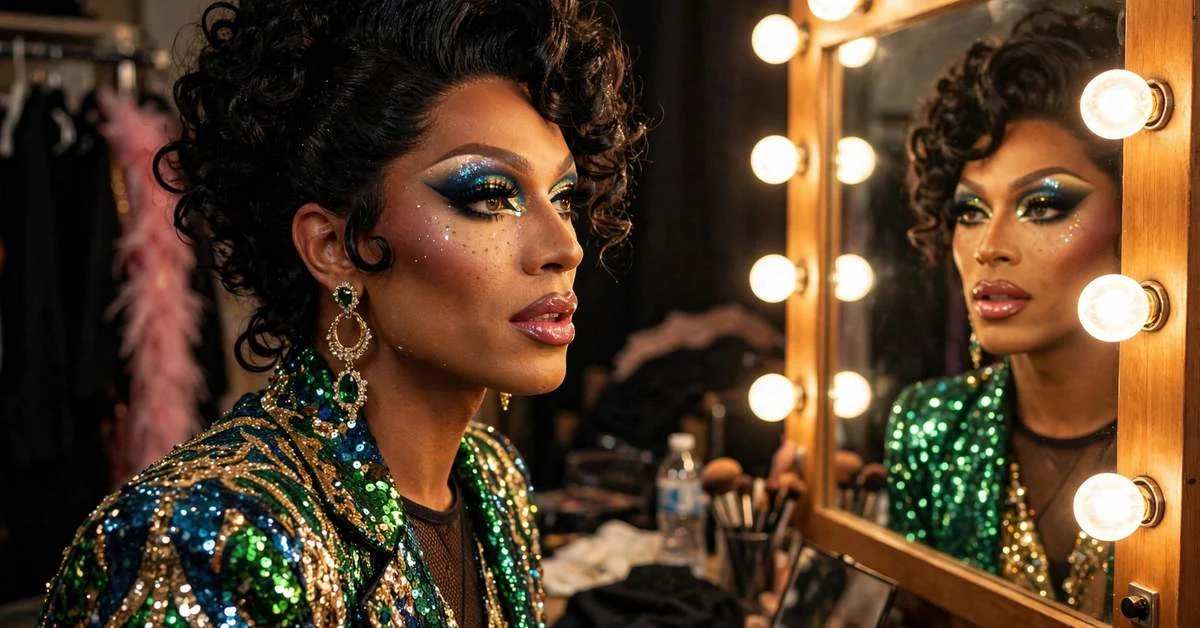
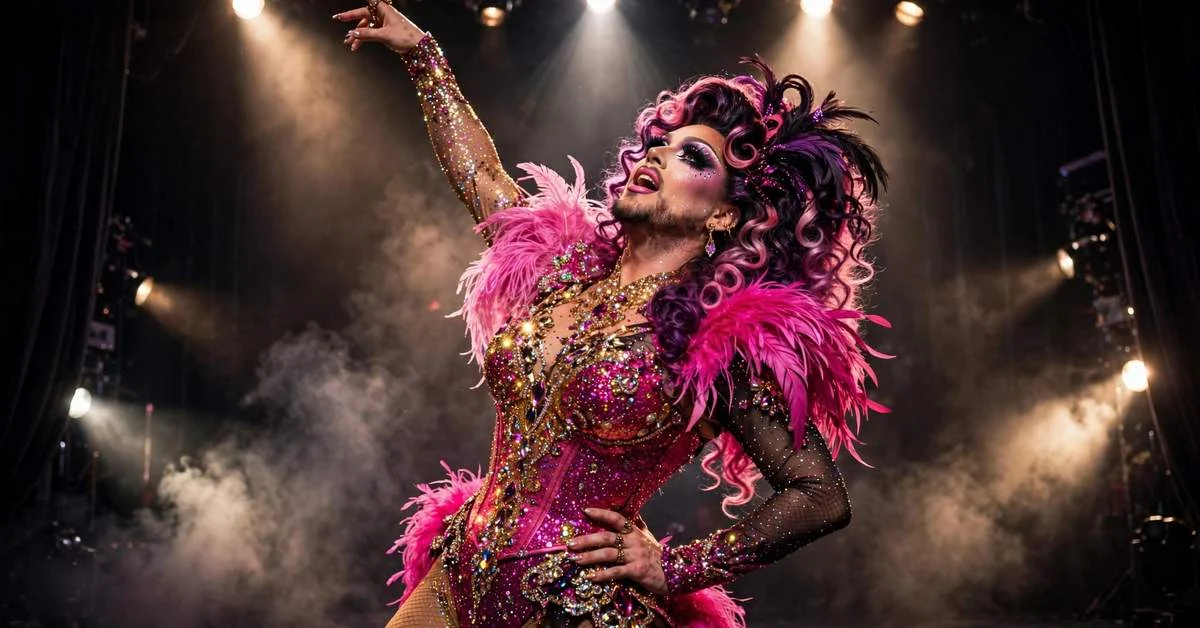
Drag is a performance art where people dress in exaggerated, larger-than-life gendered styles to entertain a crowd. Think towering wigs, painted faces, glitter, sharp comedy, and lip sync battles that bring the house down. At its core, drag turns gender itself into a costume and then puts on a show with it.
You will hear the word in a few different settings. A friend might invite you to a drag brunch on Sunday. A coworker might say a performer was in full drag at the club last night. Online, someone might warn you not to drag a beloved celebrity unless you want a fight in the replies. Same word, three different scenes, and all of them trace back to one art form.
Drag Is Older Than Hollywood
Long before reality TV, men were already performing femininity on stage. In Shakespearean theater, women were barred from acting, so male actors played every female role in dresses and wigs. The word drag itself showed up much later, in the late 1800s in Britain, and most historians link it to the long gowns that dragged across ballroom floors.
One name belongs in every telling of this story. William Dorsey Swann was born enslaved in Maryland, escaped to freedom, and by the 1880s was hosting drag balls in Washington, DC. He called himself the queen of drag, which makes him the first person on record to claim the title. His parties were raided by police more than once, because American cities at the time enforced masquerade laws that made it illegal to wear the clothes of another gender.
Drag survived by going underground. Through the early 1900s it lived in vaudeville acts and secret gay bars. Then came the 1960s and 1970s, when gay liberation turned drag shows into loud, proud community spaces. What had been hidden became a stage, and the stage became a movement.
What Actually Happens at a Drag Show
Forget everything television taught you about standing still and looking pretty. A working drag queen earns the crowd every single night. The classic toolkit includes lip syncing to a dramatic song, sharp comedy between numbers, dancing in heels that would hospitalize most people, and hosting skills that keep a rowdy bar focused for two hours.
Crowd work is half the job. A good queen reads the room, roasts the bachelorette party in the front row with love, and pulls shy audience members into the bit. And yes, tipping is part of the culture. When a queen walks the bar during a number, you hand over a dollar or two. It is not charity. It is applause you can hold.
Drag brunch deserves its own mention. Sometime in the 2010s, bottomless mimosas plus midday drag shows became a weekend ritual in cities across the United States. It pulled drag out of late-night clubs and into daylight, which is exactly why your aunt now knows what a death drop is.
Queens, Kings, and Everyone in Between
Drag queens get most of the spotlight. They are performers, often men, who build exaggerated feminine personas with makeup, padding, wigs, and wit. But the art form is much wider than that one image.
Drag kings do the mirror version, crafting masculine characters with drawn-on facial hair, bound chests, and swagger. Then there are performers who land nowhere near either pole: nonbinary artists, women performing as exaggerated women, and genderfuck acts that scramble every signal on purpose. The through line is not who the performer is offstage. It is the transformation onstage.
This is where a common mix-up needs clearing. Drag is a performance, not a gender identity. Plenty of drag artists are cisgender, plenty are transgender, and plenty are neither. Putting on the wig does not declare anything about who you are when the makeup comes off.
The Words Drag Gave the World
Listen to pop culture for five minutes and you are hearing drag vocabulary. The ballroom scene of the 1970s and 1980s, built largely by Black and Latino queer communities in New York, coined a whole dictionary that later went mainstream.
To work means to perform with total commitment, a usage pushed into the mainstream by RuPaul. Shade means a finely crafted insult. Reading means dissecting someone with wit. And when fans lose their minds over a flawless performance, the glazing starts before the song even ends. Every entrance is stunting, because subtlety was never the assignment.
The borrowing cuts both ways. Mainstream fame gave drag artists bigger stages and real money, but it also stripped some terms of their history. When a word travels from a Harlem ball to a corporate ad campaign, something gets lost in the move.
The Mainstream Moment
The TV show Drag Race, hosted by RuPaul, did for drag what cooking competitions did for chefs. It turned a niche art into appointment television, minted stars with global tours, and taught millions of viewers words like charisma, uniqueness, nerve, and talent. Winners now headline Vegas residencies and launch makeup empires.
Fashion took notes too. Runways borrow drag silhouettes, pop stars borrow drag attitude, and makeup brands build entire lines around the boldest drag techniques. Contouring, the sculpting trick that reshapes a face with light and shadow, went from drag dressing rooms to teenage bedrooms in under a decade.
None of this erased the underground. Local bars still host amateur nights where a first-time queen performs for twelve people and a sticky floor. That is still the heart of it. Television is the highlight reel.
To Drag Someone: The Other Meaning
Drag also works as a verb with a totally different sting. To drag someone means to criticize them publicly and thoroughly, usually with wit. A celebrity posts a bad take, the internet drags them for six hours, and by dinner there are memes.
This usage grew out of reading culture, the drag tradition of the artful insult. Online, it mutated into the pile-on. Post something foolish about a beloved queen and you will get ratioed into another dimension. Same word as the art form, but here the stage is a comment section and the audience has no mercy.
What Drag Is Not
A few myths keep hanging around, so let us retire them. Drag is not the same as being transgender. A trans woman is a woman living her life, while a drag performer is an artist doing a show. The two can overlap in one person, but they are different things.
Drag is not automatically sexual either. Plenty of shows are family friendly, and drag story hours at libraries draw toddlers, not trouble. Like any art form, it has adult corners and all-ages corners. The paint does not decide the rating. The venue does.
And drag is not only for gay men. Women, straight men, and nonbinary people all perform. The art form belongs to anyone willing to do the work, learn the history, and respect the stage.
FAQ
Is drag only for men?
No. Drag kings, women performing as queens, and nonbinary artists are all part of the scene. The art form is about transformation, not about the gender you started with.
What is the difference between a drag queen and a transgender woman?
A drag queen is a performer playing a character on stage. A transgender woman is a woman, full stop, onstage or off. One is a job. The other is an identity.
Why do people tip at drag shows?
Tipping is how the culture shows love in real time. Performers often work for modest pay, and a dollar during a number says you see the effort. If you enjoyed the show, tip like you mean it.
Where did the word drag come from?
It emerged in late 1800s Britain, most likely from the long gowns that dragged across ballroom floors during performances. The Shakespeare acronym story you may have heard is a myth with no real evidence behind it.
The Last Word on Drag
Drag started as a survival trick on stages that banned women, grew into a secret language of queer ballrooms, and ended up as one of the most imitated art forms on the planet. Through every era, the formula stayed the same: take the rules about how a person should look, break them beautifully, and make the crowd scream.
That is why the word carries so much weight. When someone says drag, they are not just naming a costume. They are naming a century of people who refused to be small. The wigs get bigger, the jokes get sharper, and the art keeps moving. Long may it continue.

I’m Riley Spencer. I track down the latest slang, memes, and viral phrases for grammerzones.com, explaining what they mean and how people actually use them, in plain simple words.