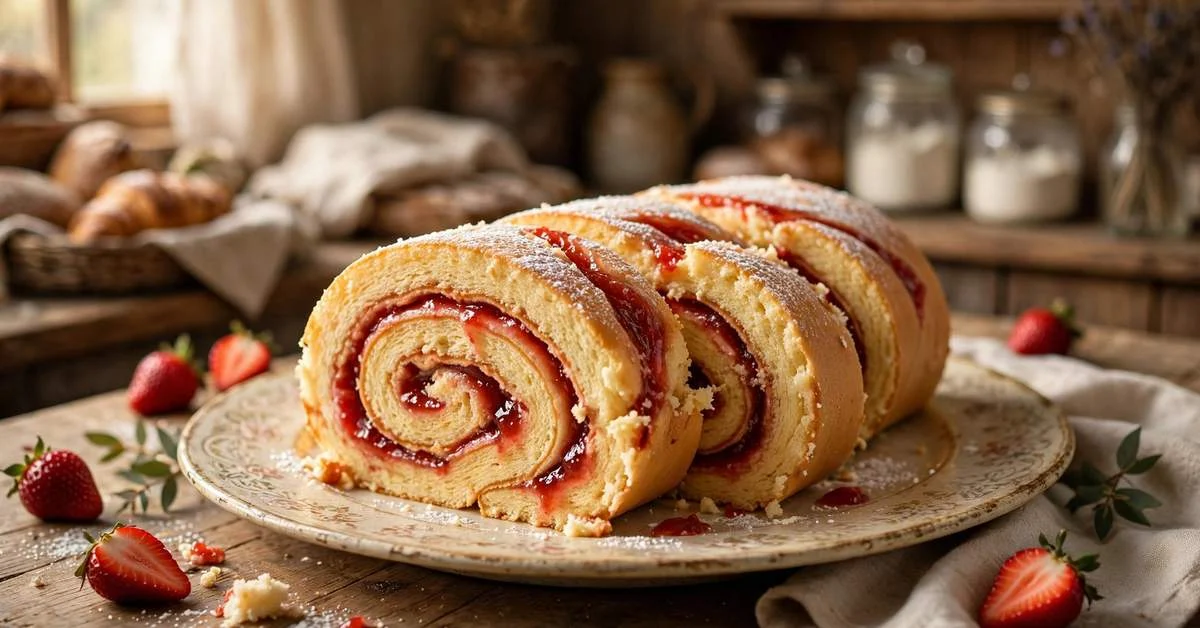
Jelly roll is a rolled sponge cake filled with jam, and it is also old jazz and blues slang for genitalia, a lover, and lovemaking itself. The same sweet word lived two completely different lives, one in the bakery and one in the smoky clubs of 1920s New Orleans, and most listeners never noticed the switch. If you grew up hearing the word at the dessert table, the second meaning can feel like a prank. But for blues singers a century ago, jelly roll was one of the busiest code words in American music. This is the story of how a pastry became a secret, and how the secret outlived the era that created it.
The Pastry Comes First
Start with the innocent version. A jelly roll is a thin sponge cake, baked flat, spread with jam or jelly and sometimes cream, then rolled into a cylinder and sliced into spirals. Outside the United States it usually goes by the name Swiss roll. It is the kind of dessert that shows up at church picnics and old cookbooks, harmless and old-fashioned.
This is the meaning most people meet first, and it is the reason the word sounds so funny today. Nobody names a dessert expecting it to turn into slang. But English has a long habit of hiding grown-up meanings inside food words, and jelly roll turned out to be one of the best hiding places ever invented.
The Second Meaning Hiding in the Lyrics
In the world of early jazz and blues, jelly roll meant something far spicier. Scholars who studied the lyrics of the era found that jelly roll was the most common food image singers used for genitalia, for a lover, and for the act of lovemaking itself. The word jelly often got shortened and did the same work on its own. One singer bragged about selling jelly every day, another complained that her man thought she had sold all the jelly she had. The pastry was just the cover story.
The trick worked because of censorship. Blues singers performed for mixed audiences and recorded for labels that would never allow plain speech about sex. So they built a whole grocery store of code words. Alongside jelly roll, singers sold cakes, pies, cookies, pudding, and sweet potato pies, while men shopped for peaches. Sweet food meant sweet business, and everybody in the club understood the menu. One scholar suggested the image came simply from the rolling motion itself, which tells you how physical and playful the metaphor was.
The result was a kind of open secret. The songs sounded cheerful to anyone not paying attention, which was exactly the point. If a lyric ever felt a little too sus, that was the signal to listen closer.
The Man Who Put It on the Marquee
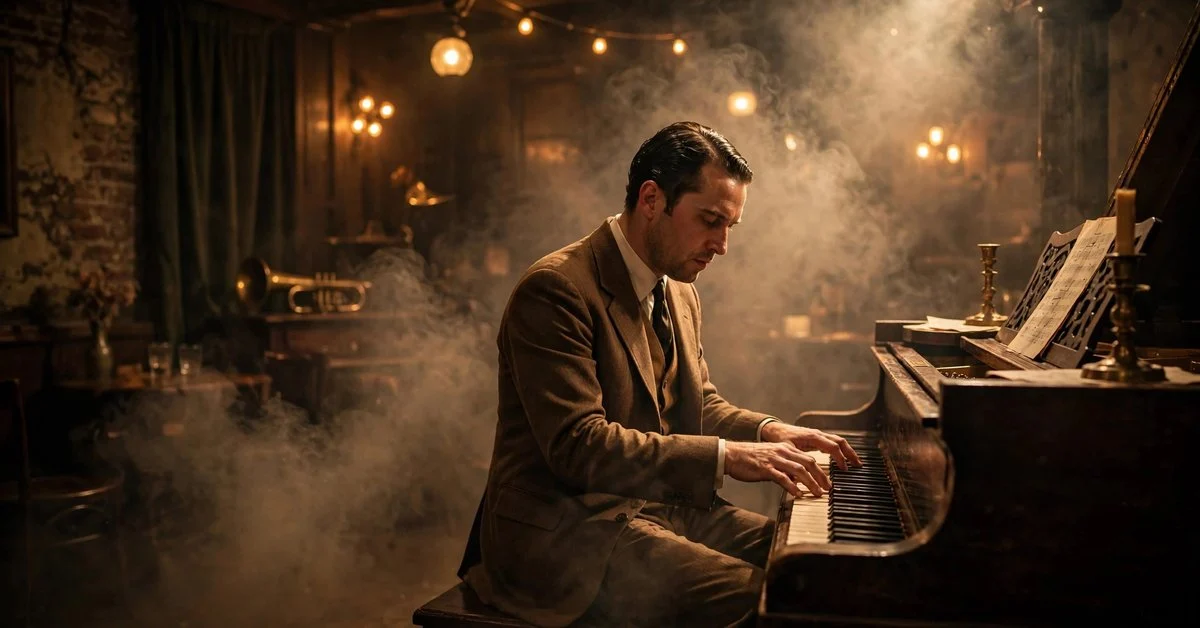
No one carried the name further than Jelly Roll Morton. Born Ferdinand Joseph LaMothe in New Orleans around 1890, he was a piano prodigy who started playing in the brothels of the Storyville district at about fourteen. To keep his religious great-grandmother calm, he told her he worked nights as a watchman in a barrel factory. The lie held until she learned the truth and threw him out of the house.
It was in those sporting houses, surrounded by ragtime and rough talk, that he picked up the nickname Jelly Roll. At the time it was Black slang for genitalia, male and female alike, and wearing it as a stage name was pure swagger. Morton was famous for stunting about his talent, once claiming he had invented jazz itself, and the bold nickname fit the act perfectly. In 1915 his Jelly Roll Blues became one of the first jazz compositions ever published as sheet music, which means the slang term is literally printed in the founding documents of jazz.
The Songs That Sang It Sweet
Morton was only the most famous example. The phrase turns up across dozens of blues records from the 1920s onward. Clarence Williams wrote a song built entirely around the tease of refusing to share any of this jelly roll, and powerhouse singers like Bessie Smith and Ida Cox recorded their own versions. In 1927 Peg Leg Howell released New Jelly Roll Blues, boasting about a sweet jelly that could satisfy a worried soul, with a bakery metaphor doing all the heavy lifting.
The code survived for decades. In the 1940s Billy Eckstein recorded the storming Jelly, Jelly, with a wild line about jelly roll killing his pappy and leaving his mother stone blind. By then the word had traveled from New Orleans brothels to national radio without most listeners catching the joke. That is the mark of great slang. It hides in plain sight so well that grandmothers hum along.
Why Dessert Made the Perfect Disguise
Food metaphors worked because they were flexible. A singer could praise, complain, bargain, or brag using the same sweet vocabulary, and the meaning shifted with the wink in the voice. Jelly roll could be a person, a body part, or the act itself depending on the verse. Cake, pie, and jelly formed a whole family of related codes, so songwriters never ran out of fresh ways to say the unsayable.
There is also something deeply human about it. Turning desire into dessert keeps the songs playful instead of crude. The blues were often about hard lives, and the food code let singers talk about pleasure with humor and style. To be honest, the wordplay is half the fun even now, tbh, once you know what to listen for.
The Name Lives On
The strangest chapter belongs to the present day. A modern country star performs under the name Jelly Roll, and in a 2024 interview he learned on camera what the name meant a century ago. He took it well, saying he loved that his stage name once carried such a bold meaning. He also joked about his early career, when the top search results for his name were the jazz pianist and the pastry, and how long it took him to outrank a dessert.
That is the full circle of the word. It started as a cake, became a secret, crowned a jazz king, hid in a hundred songs, and now headlines arenas again. Most slang burns out in a few years. Jelly roll just kept rolling.
FAQ
Is jelly roll a dirty word? It depends on the room. As a dessert it is perfectly innocent. In old blues lyrics it was a deliberate sexual code word, so context decides everything.
Why did Jelly Roll Morton choose that name? He picked it up while playing piano in New Orleans brothels as a teenager, where it was slang for genitalia. The bold nickname matched his larger-than-life persona.
What does jelly mean in blues songs? Usually lovemaking, sexual appeal, or a lover. Singers used it the way modern lyrics might use candy or sugar, as a sweet stand-in for desire.
Do people still use jelly roll as slang? Rarely in conversation, but the songs keep it alive. The modern country singer Jelly Roll has given the old meaning a fresh round of attention.
Conclusion
Jelly roll is proof that slang can hide anywhere, even on the dessert table. A simple rolled cake gave its name to one of the richest code words in American music, carrying meanings about love and desire through a century of songs. From Storyville pianos to Bessie Smith records to a modern arena tour, the word kept its double life going because it was just too useful and too fun to drop. The next time you hear it, listen twice. The sweet version and the secret version have been sharing the same word for a hundred years, and neither one is letting go.

I’m Andrew West, a content writer at GrammerZones.com, specializing in high-ranking grammar blogs and modern language trends. I simplify complex grammar and decode Gen Z and Gen Alpha slang to make communication clear, relevant, and engaging.