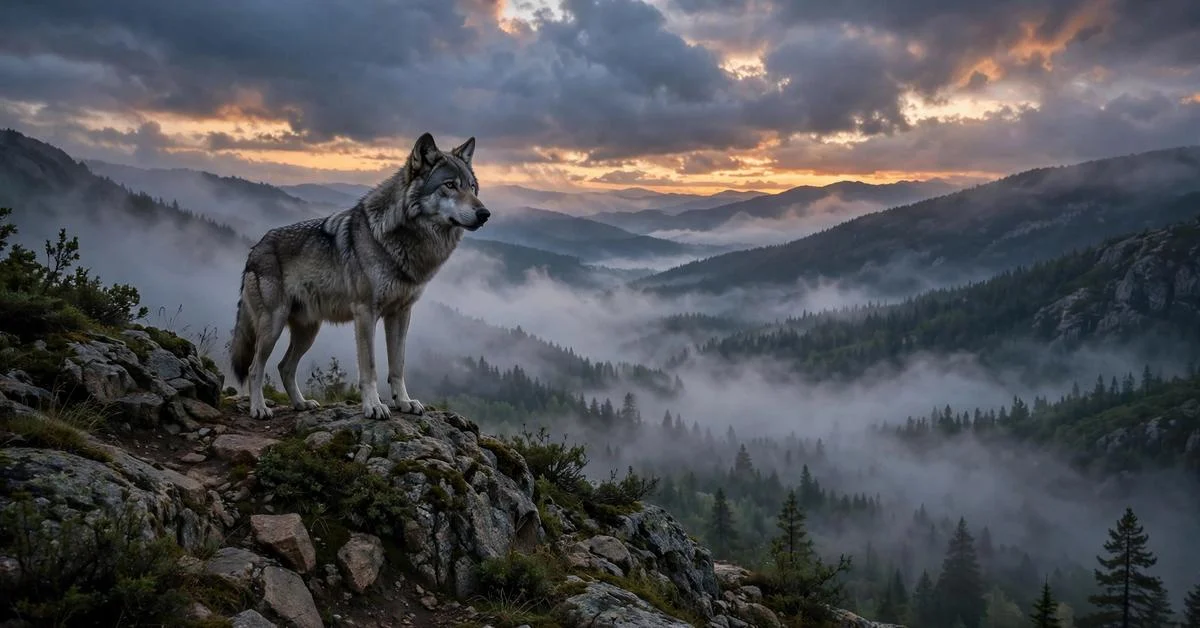
Lobo means wolf in Spanish, and in slang it marks a person who moves through life like one. It can praise a lone survivor, warn about a cunning player, or simply describe someone who hunts alone. A coach says ese jugador es un lobo en la cancha, and everyone understands the player is relentless. A friend warns no le creas, es un verdadero lobo, and the message is clear: watch your back. A quiet coworker gets called un lobo solitario, and it lands as pure respect. Same animal, three different judgments. The question is never what the word means. It is which wolf is standing in front of you.
Face One: The Lone Wolf
The most respected wolf in Spanish slang walks alone. Lobo solitario, the lone wolf, describes someone who does not need the pack: the solo traveler, the independent worker, the quiet one who handles business without asking for help. Dictionaries list it as a set phrase, and everyday speech uses it as a compliment with steel in it.
This wolf survives. That is the whole point. While the pack argues about direction, the lobo solitario is already moving. The image fits freelancers, fighters, and anyone who has rebuilt a life from zero. Walking that road alone takes a tuff mindset, and Spanish gives that mindset an animal.
There is old weight behind the image too. The word comes from the Latin lupus, and in some Indigenous traditions of the Americas the wolf stands as a spiritual guide, not a villain. Refusing to follow the pack is based behavior in internet terms, but Spanish slang was praising it long before the internet existed.
Face Two: The Hunter
Turn the wolf around and the compliment becomes a warning. Es un verdadero lobo, he is a real wolf, means the person is cunning and manipulative. This wolf does not walk alone out of strength. He circles. He plays both sides. He pursues his own interests no matter who gets hurt, which is why one dictionary glosses the slang sense as someone with no loyalty who switches groups with ease.
Dating has its own version. In romantic slang, a lobo can be a player, the charming hunter working the room. Dictionaries even link the English informal sense of wolf to tenorio, the classic Spanish word for a womanizer. The metaphor is ancient: the hunter, the prey, the chase. It is not a compliment, and anyone called it usually knows exactly why.
Business has its wolves too. En el mundo de los negocios hay muchos lobos means the business world is full of wolves, and nobody hearing it pictures a team-building retreat. When someone plays both sides of a deal or a friendship, that behavior reads as pure sus to everyone watching. Same animal as Face One, opposite judgment. Context is the only thing standing between respect and alarm.
Face Three: The Folk Wolf
The third wolf lives in stories, jokes, and old sayings. El lobo feroz, the big bad wolf, walked out of European fairy tales and straight into Spanish childhoods, which is why the word still carries a shiver of the villain. But folklore also made the wolf funny.
Take menos lobos, Caperucita, literally fewer wolves, Little Red Riding Hood. It means tell me another one, and it is what you say when someone is clearly exaggerating. Someone claims they ran ten miles before breakfast, and the room answers with the wolf. In Spain, pillar un lobo means to get plastered, a very informal way to say someone got very drunk. Nobody is sure why the wolf got that job, but the image of howling at the moon probably helped.
Then there are the proverbs. A carne de lobo, diente de perro means roughly that tough threats demand tough answers, when the going gets tough, the tough get going. And a lobo de mar, a sea wolf, is an old, experienced sailor, the kind with salt in every story. The folk wolf is the most playful of the three faces, and the easiest to use without stepping on anyone.
The Curveballs
Like all good slang, lobo refuses to sit still, and a few countries gave it jobs nobody would guess. In Mexico, calling someone un lobo can mean he is a traffic cop, informal street talk for the officer writing the ticket. In Chile, lobo works as an adjective meaning shy or withdrawn, close to huraño. Neither has anything to do with fangs.
Colombia adds the strangest twist of all. There, lobo or loba can describe taste that is trashy and flashy, especially in clothes. It is a very local sense, and using it outside Colombia will only confuse people. The lesson is a useful one for all slang: a word can travel across twenty countries and pick up a new job in every single one.
Pack Animal, Lone Reputation
Here is the irony sitting under all three faces. Real wolves are pack animals. They live in family groups, hunt in teams, and howl to stay in touch with the pack. The lone wolf is the exception in nature, yet slang built the whole reputation on the exception.
That choice tells you what slang values. The pack is ordinary. The loner is a story. Real wolves move as a tight unit, almost like a mob with its own rules, but nobody calls a team player un lobo. The word goes to the one who breaks away, for better or for worse. Language does not describe nature here. It describes what humans find interesting about nature.
FAQ
Is calling someone a lobo a compliment or an insult?
It depends on which face is showing. Lobo solitario is respect for independence. Es un lobo about a schemer is a warning. Listen for the tone and the company before deciding.
What does loba mean?
It is the feminine form, used for a female wolf. In street talk it can label a cunning or fierce woman, and senses shift a lot by country, so context matters more than the dictionary here.
Does lobo mean player in dating?
It can. The hunter sense covers the charming operator working the room, close to the old word tenorio. It is not a compliment, so use it about others with care and never as a pickup line.
What is the difference between lobo and lobo solitario?
Lobo alone is ambiguous and needs context to settle. Adding solitario pins it to the loner, usually with respect. The two extra syllables remove most of the doubt.
The wolf keeps showing up in slang because it is the rare animal that can mean three things at once: the survivor who needs no one, the hunter no one should trust, and the folk villain everyone grew up hearing about. Spanish did not pick the wolf by accident. It picked the animal with the most faces, then gave each face a job. Learn to tell them apart and you will hear exactly which wolf someone means, every single time.

I’m Riley Spencer. I track down the latest slang, memes, and viral phrases for grammerzones.com, explaining what they mean and how people actually use them, in plain simple words.