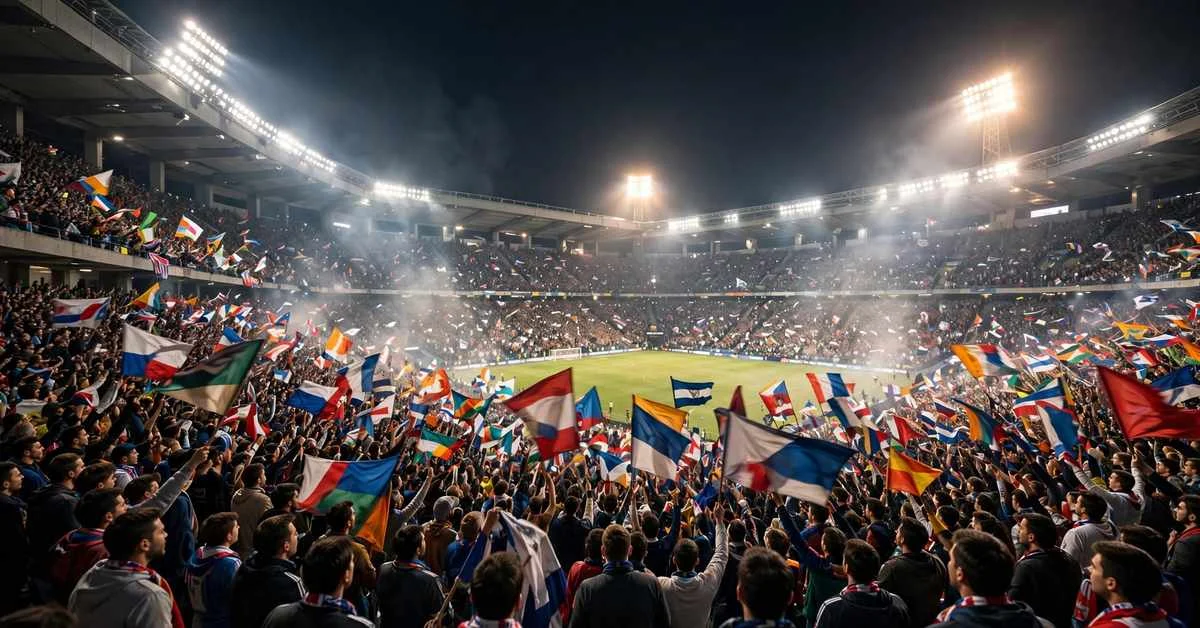
Soccer is the American word for the sport the rest of the world calls football. It is not a wrong name or a made-up one. It comes from 1800s British slang, and it stuck in countries where football already meant something else. Today it names the most-played, most-watched sport on the planet.
Call it soccer in the United States and nobody blinks. Call it soccer in London and you might start an argument. The word carries a whole history of class, empire, and sporting rivalry. That is a lot of baggage for six letters, but it is exactly what makes the word interesting.
A British Inside Joke That Became a Name
The word soccer was born as a joke among English university students. In the 1860s, England standardized the rules of the kicking game under the Football Association, so the sport became known as Association Football. That mouthful needed a nickname, and Oxford students had a habit of adding er to the end of shortened words.
Association became assoc, then assoccer, then soccer. Rugby football got the same treatment and became rugger. Both words floated around British sports pages for decades without controversy. Soccer was simply the casual way to say Association Football, the same way a student might call breakfast brekker.
The first written use showed up in the 1880s. For a long stretch, soccer and football lived side by side in Britain. The word only became a sore point much later, when Americans kept using it long after the British had mostly dropped it.
Why America Held On to It
America already had a football, and it involved helmets, touchdowns, and very little kicking. When the kicking game crossed the Atlantic, it needed its own name to avoid constant confusion. Soccer was sitting right there, ready made.
Sports organizations made it official. The national body became U.S. Soccer, leagues carried the word, and generations of kids grew up playing soccer on Saturday mornings. The name felt natural because it was the only name most Americans ever knew.
Australia and Canada landed in the same spot. Both had their own dominant football codes, so soccer stayed useful as the clear, confusion-free label. The word survived not out of stubbornness but out of practicality. When three sports share one name, somebody has to compromise.

The Beautiful Game Goes Global
Whatever you call it, the sport itself conquered the world. A ball, some open space, and a few friends are all it takes. No expensive gear, no special field, no complicated setup. That simplicity is the secret behind its global takeover.
The World Cup turns that simplicity into the biggest show on earth. Billions of people watch, and entire countries shut down for big matches. Club teams have fan bases that span continents. A kid in Lagos, a teenager in Buenos Aires, and a college student in Ohio can all argue about the same game, the same players, and the same controversial calls.
Players call it the beautiful game, and the nickname fits. Tbh, few sports produce moments of pure art the way a perfect goal does. The combination of low cost and high drama made soccer the default sport of the planet.
The Soccer vs Football Debate
Ask if it should be called soccer or football and you will get a strong opinion. Many international fans treat soccer as an American mistake, a sign that the United States does not respect the sport. Americans tend to shrug, since football was taken long before most of them were born.
Here is the twist that ends most arguments: the British invented the word. Telling a football purist that soccer is actually English slang from the 1880s usually stops the lecture cold. The word is not an American corruption. It is a British export that America simply kept using.
Both names are correct in context. Soccer works in countries with competing football codes. Football works everywhere else. Knowing the history lets you use either one without looking lost, and it gives you a great comeback for the next name debate in the group chat.
Soccer in Everyday Speech
The word shows up far beyond the pitch. A soccer mom became shorthand for a suburban parent shuttling kids between activities. Pickup soccer means a casual game with no refs and no stakes. Saying someone plays soccer tells you about their weekends, their friendships, and probably their shin guards.
Coaches and fans built a whole vocabulary around the game too. A screamer is a powerful shot, a clean sheet means no goals allowed, and parking the bus means defending with everyone behind the ball. None of these need a rulebook to understand. They grew out of wyd on the field, the way all good slang does.
Even people who never watch a match know the basics. The World Cup, the penalty kick, the red card, the last-minute winner. Soccer seeped into everyday language because the sport seeped into everyday life.
FAQ
Why do Americans call it soccer?
Because American football already owned the name football. Soccer, a British nickname for Association Football, was the clear alternative, and sports organizations made it official.
Did Americans invent the word soccer?
No. It came from 1800s English university slang. Association became assoc, then soccer, the same way rugby became rugger. The British used it for decades before dropping it.
Is it wrong to say soccer?
Not at all. It is the standard term in the United States, Canada, and Australia. In most other countries, football is the norm. Context decides which one fits.
Why is soccer called the beautiful game?
Because of its flow, creativity, and dramatic moments. The phrase captures how the sport can look like art when played at the highest level.
Conclusion
Soccer is a British joke that became an American institution and a global obsession. It started as Oxford slang for Association Football, survived because America needed a distinct name, and now labels the yolo spirit of the world game. The next time someone corrects your soccer to football, you can smile and tell them where the word really came from. Language, like the sport itself, belongs to everyone who plays it.

I’m Riley Spencer. I track down the latest slang, memes, and viral phrases for grammerzones.com, explaining what they mean and how people actually use them, in plain simple words.