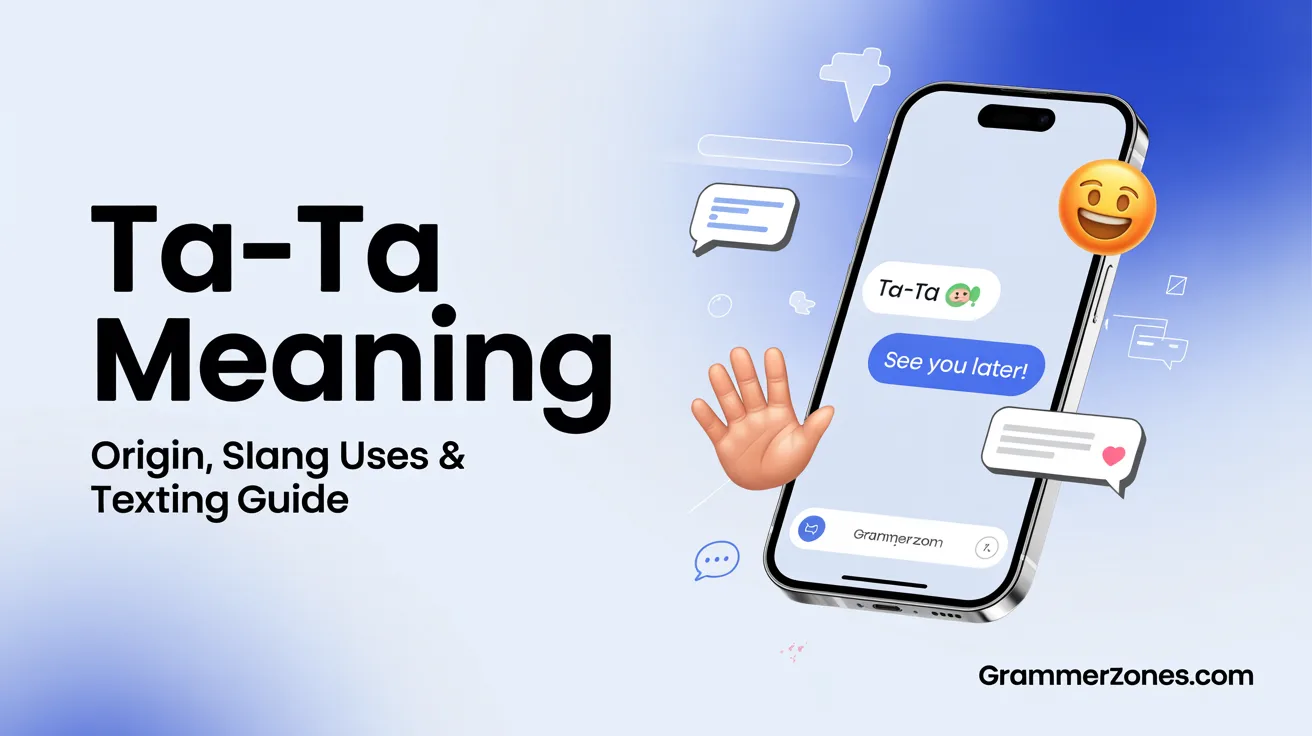
Ta-ta means goodbye, bye-bye, or see you later. It’s a friendly, informal expression people use when ending a conversation on a positive note. Although the phrase has been around for generations, it still appears in text messages, social media comments, online chats, and everyday conversations.
If you searched for ta-ta meaning, chances are you saw the phrase in a message, heard it in a conversation, or came across it on platforms like WhatsApp, Instagram, TikTok, or Snapchat.
While its most common meaning is simply goodbye, the term can have different interpretations depending on the language, culture, or context in which it is used. That’s why people often look up related searches such as ta-ta meaning slang, ta ta meaning in chat, ta-ta meaning in English, or what does ta ta mean in French.
In this guide, you’ll discover where the expression comes from, how it is used today, what it means across different contexts, and why this simple farewell continues to remain part of modern communication.
What Does Ta-Ta Mean?
At its core, ta-ta is an informal way of saying goodbye. It carries a warm, cheerful tone and is usually used among friends, family members, or acquaintances rather than in formal situations.
Simple Definition
Ta-ta = Goodbye, farewell, see you later, or take care.
Unlike internet abbreviations such as LOL or BRB, ta-ta is a traditional spoken expression that predates digital communication by many decades. Even so, it has adapted naturally to modern texting culture and online conversations.
Examples of Use
- I’m heading out now. Ta-ta!
- Thanks for stopping by. Ta-ta and take care.
- See you tomorrow. Ta ta!
The phrase sounds friendly rather than abrupt, which is one reason it has remained popular over time.
Ta-Ta Meaning in English
For anyone searching ta-ta meaning in English, the translation is straightforward:
- Goodbye
- Bye
- Farewell
- See you later
- Take care
All of these convey the same general idea of ending a conversation politely.
The Origin and History of Ta-Ta
One reason people remain curious about the expression is its long history.
The ta-ta origin is commonly linked to British English, where it emerged as a lighthearted farewell during the late nineteenth and early twentieth centuries. Language historians note that repeating sounds has long been common in conversational English. Similar examples include bye-bye, night-night, and no-no.
This repetition gives words a softer and friendlier sound, making them easier to remember and more pleasant to use in everyday speech.
The Ta-Ta Goodbye Origin
The phrase became especially popular in Britain as a casual sign-off among friends and family members. Over time, it spread to other English-speaking regions and eventually became recognizable around the world.
Its continued use shows how simple expressions often outlast language trends. While many slang terms disappear after a few years, ta-ta has remained familiar across generations because its meaning is clear and universally understood.
Does Ta-Ta Mean Thank You?
This is a common source of confusion.
In British English, the word ta can sometimes mean thanks. However, ta-ta does not typically mean thank you. The doubled expression is overwhelmingly used as a farewell rather than an expression of gratitude.
How Ta-Ta Is Used in Different Contexts
Like many informal expressions, the meaning remains largely the same while the context changes.
Everyday Conversations
The most common use is as a friendly goodbye.
Example:
I’m off to work now. Ta-ta!
Family and Friends
Because it sounds warm and approachable, the phrase is often used between relatives and close friends.
Example:
Have fun on your trip. Ta-ta!
Casual Written Communication
People occasionally use it in handwritten notes, greeting cards, or informal emails.
Example:
Great catching up with you. Ta-ta for now!
Professional Settings
Although there is nothing offensive about the phrase, it may sound overly casual in workplace communication. In professional emails, alternatives such as Best regards, Kind regards, or Sincerely are generally more appropriate.
Ta-Ta Meaning in Chat, Text Messages, and Social Media
The rise of digital communication has introduced older expressions to new audiences.
Ta Ta in Text
When someone writes ta ta in text, they are usually ending the conversation in a friendly way.
Example:
Person A: Talk later?
Person B: Sure. Ta-ta!
There is rarely any hidden meaning behind it.
On WhatsApp, people use the phrase much like they would in real-life conversation.
Example:
Heading offline now. Ta-ta!
You might see it in comments, captions, or direct messages.
Example:
Taking a social media break. Ta-ta everyone!
TikTok
On TikTok, the expression sometimes appears humorously because it sounds slightly old-fashioned compared with modern internet slang. Creators may use it ironically, nostalgically, or simply as a playful way to say goodbye.
Is It Slang?
Many people search for ta-ta meaning slang or ta ta slang meaning urban dictionary. While it is informal, it is better described as a colloquial expression than modern internet slang. Its roots go back much further than today’s social media platforms.
Meanings in Other Languages and Cultural Contexts
Language differences often create confusion around familiar words.
Ta-Ta Meaning in Hindi
In Hindi, the expression is generally understood as:
- बाय
- अलविदा
- फिर मिलेंगे
All three convey the idea of saying goodbye.
Ta-Ta Meaning in French
Searches for ta-ta meaning in French, ta ta meaning French, tata meaning in French, and what does ta ta mean in French are common.
In French, tata often refers affectionately to an aunt. Because of this, a French speaker may interpret the word differently depending on context.
Ta-Ta Meaning Spanish
Queries such as ta-ta meaning Spanish or tata slang meaning Spanish usually come from people encountering the expression online. In most cases, Spanish speakers recognize it as an English farewell rather than a standard Spanish term.
Other Meanings People Search For
Some keyword searches involve meanings unrelated to the traditional farewell.
Ta Ta Meaning Baby
Parents sometimes use repetitive sounds when speaking to young children. Because ta-ta sounds playful and easy to pronounce, it occasionally appears in baby talk and family conversations.
Ta Ta Meaning Breast
In some English-speaking regions, ta-tas is informal slang for breasts. This usage is entirely separate from the farewell expression and depends heavily on context.
For example:
- She joked about her ta-tas.
The meaning here has nothing to do with saying goodbye.
Ta-Ta-Ta Meaning and Grrra-Ta-Ta-Ta Meaning
Searches such as ta-ta-ta meaning and grrra-ta-ta-ta meaning often relate to music lyrics, internet memes, sound effects, or popular culture references. These uses are distinct from the traditional phrase and should be interpreted according to the context in which they appear.
Common Misconceptions About Ta-Ta
Several myths continue to circulate online.
It Means Thank You
Not usually. Although ta can mean thanks in British English, ta-ta almost always means goodbye.
It Is Only Used by Older People
Not true. While the expression has historical roots, people of different ages still use it today.
It Is an Acronym
False. Ta-ta is a phrase, not an abbreviation or acronym.
It Is Exclusive to Britain
The expression originated in British English, but it is widely recognized in many English-speaking countries.
Ta-Ta Synonyms and Alternatives
If you want to vary your language, there are plenty of alternatives.
Common Ta-Ta Synonyms
- Goodbye
- Bye
- Bye-bye
- See ya
- See you later
- Catch you later
- Later
- Take care
- Farewell
- So long
- Cheerio
- Cya
Each option carries a slightly different tone, but all perform the same basic function: ending a conversation politely.
How to Respond When Someone Says Ta-Ta
Responding is simple because the phrase is a farewell.
Suitable responses include:
- Bye!
- See you later!
- Take care!
- Talk soon!
- Catch you later!
- Have a great day!
- Goodbye!
Example Conversation
Person A: I’ve got to run. Ta-ta!
Person B: See you later. Take care!
Matching the friendly tone usually feels most natural.
Ta-Ta in Online Conversations and Dating Apps
Although many modern users prefer newer slang expressions, ta-ta still appears in online spaces.
On dating apps, messaging platforms, and social networks, it often signals friendliness and approachability. Because the phrase sounds cheerful rather than abrupt, it can make a conversation end more naturally.
For example:
- It was nice chatting with you. Ta-ta!
- Talk again soon. Ta ta!
In a digital world filled with abbreviations and trending slang, familiar expressions often stand out precisely because they feel personal and authentic.
Frequently Asked Questions
Is ta-ta rude?
No. It is generally considered friendly, polite, and lighthearted.
Is ta-ta formal or informal?
It is informal and best suited to casual conversations.
Can ta-ta be used in business emails?
It can, but most professionals prefer more formal sign-offs such as Best regards or Kind regards.
Is ta-ta British slang?
It originated in British English, but it is now widely understood beyond the UK.
How should ta-ta be written?
Both ta-ta and ta ta are commonly accepted. The hyphenated form is slightly more traditional.
Conclusion
The ta-ta meaning is simple yet enduring: it is a warm and informal way of saying goodbye. Originating in British English, the expression has remained part of everyday language for more than a century and continues to appear in conversations, text messages, social media posts, and online chats.
If you encounter ta ta in text, hear it in casual conversation, or come across it while browsing social media, the intended meaning is usually bye, see you later, or take care. While certain languages and slang communities may use similar words differently, context almost always makes the meaning clear.
Its longevity highlights something interesting about language: not every popular expression needs to be new. Sometimes the phrases that survive the longest are the simplest ones and ta-ta is a perfect example.

I’m Andrew West, a content writer at GrammerZones.com, specializing in high-ranking grammar blogs and modern language trends. I simplify complex grammar and decode Gen Z and Gen Alpha slang to make communication clear, relevant, and engaging.






1 thought on “Ta-Ta Meaning: Origin, Slang Uses & Modern Texting Explained”