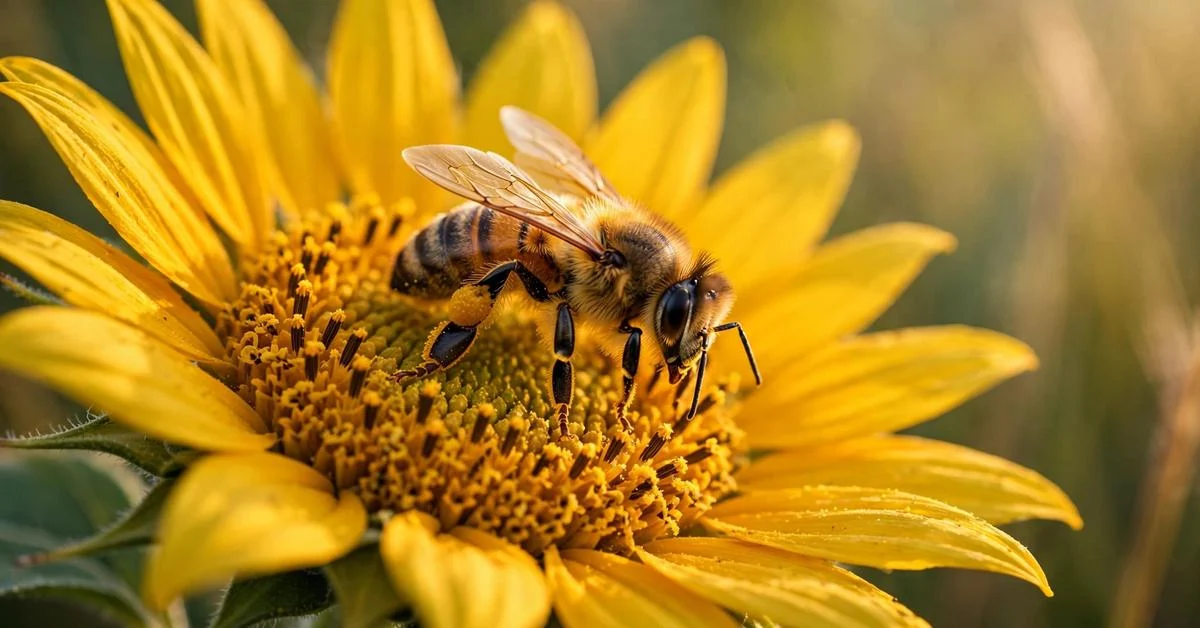
Bee is slang for a hard worker, the boss of a social group, and the star of the talk parents dread. A busy bee never stops moving. A queen bee runs the whole hive, meaning the friend group, the office, or the school hallway. And the birds and the bees is the classic gentle way of saying it is time to explain where babies come from. One small insect carries three big jobs in everyday English.
What makes bee special is how old and how alive it is at the same time. People have called hard workers busy bees for centuries, yet the phrase still shows up in group chats and performance reviews today. The queen bee still rules every cafeteria. And no phrase has survived the awkwardness of growing up quite like the birds and the bees. This is the full tour of the hardest working word in the insect kingdom.
The Busy Bee: Work Culture in One Word
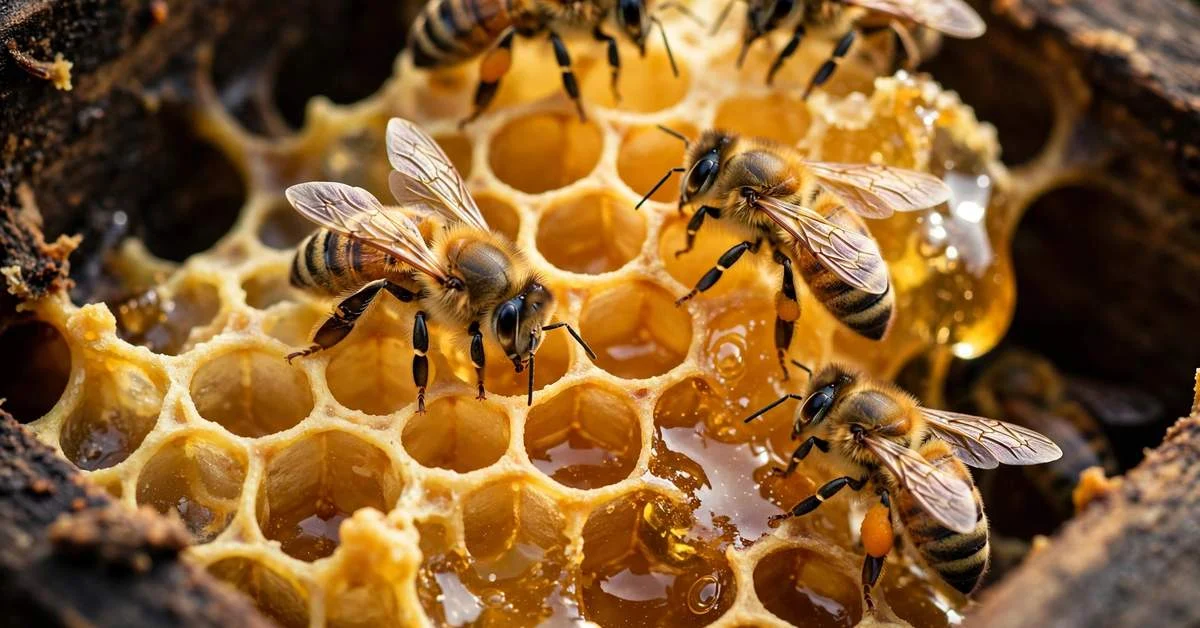
Watch a real beehive and you will see the idea. Worker bees fly out, gather nectar, come back, and do it again all day without meetings or pep talks. Calling someone a busy bee borrows that energy. It means the person is always in motion, always handling something, and somehow never drops anything.
It is almost always a compliment. A manager calls an employee a busy bee and means reliable. A friend says it about a mom juggling three kids and a job and means respect. The phrase carries warmth that harder words like workaholic do not. A workaholic sounds like a problem. A busy bee sounds like a marvel of nature.
The image also explains why the phrase never died. Every generation rediscovers the same truth: some people just hum along at a higher speed. Students during finals week, nurses on a night shift, small business owners doing everything themselves. The busy bee is the patron saint of getting things done.
There is a funny side to it as well. Tell someone they are a busy bee and they will usually laugh and keep working. The phrase gives exhaustion a cute uniform. It says I see how hard you are going, and I admire it, in four syllables.
The Queen Bee: Every Group Has One
Every hive has one queen, and every social circle seems to have one too. The queen bee is the person everyone orbits. She sets the plans, picks the restaurant, and decides who sits where, sometimes without saying a word. In a real hive the queen is the only one who lays eggs, which makes her literally the center of the colony. The slang keeps the power and drops the biology.
The term is most famous in school settings, thanks to movies about popular girls and their courts. But queen bees run offices, group chats, sports teams, and families as well. The pattern is the same everywhere: one strong personality, a loyal inner circle, and a set of unwritten rules that everyone else learns fast.
It can be praise or shade depending on the tone. Calling a friend the queen bee of the planning committee is admiration for her leadership. Calling a coworker a queen bee after she shot down three ideas in a meeting is not. Context and facial expression do the deciding, as with most slang about people.
The queen bee usually has standards to match the crown. When she walks in wearing the most bougie outfit in the room, suddenly everyone else feels underdressed. That is the queen bee effect: the whole group adjusts to her level without being asked.
And here is the secret about hives. The queen does not actually boss the workers around. Real bees follow chemical signals and ancient instincts, not orders. The slang version has more drama than the science, which is exactly why people love saying it.
The Talk Nobody Wants to Have
Now the famous one. The birds and the bees is the gentle code phrase for explaining reproduction to kids. Instead of a blunt biology lesson, parents talk about bees carrying pollen to flowers and birds laying eggs. Nature does the heavy lifting, and everyone at the table gets to keep some dignity.
The phrase is older than most people guess. Scholars trace the pairing of birds and bees to a poem published in 1825, and some point to an even earlier diary entry from the 1600s that mentions both creatures together. By the late 1800s it was common enough to show up in essays and books about raising children. It survived because it works. Pollination is visible, eggs are visible, and the metaphor lets adults explain a tricky subject without freezing up.
Today the phrase is mostly nostalgic. Kids learn the facts from school, friends, and the internet long before any parent sits them down. But the birds and the bees lives on as a joke and a milestone. Saying someone still needs the talk means they seem innocent about how the world works. Announcing that you got the talk is a small badge of growing up.
It also shows how slang protects feelings. A direct word can feel harsh. A nature metaphor feels safe. The birds and the bees turned an awkward conversation into a shared cultural ritual, and that is a rare achievement for any phrase.
Bees You Can Win and Bees You Join
Bee has two more lives that have nothing to do with insects working or ruling. A spelling bee is a contest where kids spell hard words on stage until one champion remains. The name goes back to the 1800s in America, when bee meant a social gathering for a shared task. A spelling bee was simply a gathering for spelling, the same way neighbors once held a quilting bee to finish a quilt together or a barn-raising bee to build a barn.
That gathering meaning is mostly retired now, but it left fingerprints. When people put the bee on someone, old slang for hitting someone up for a favor or a loan, they were asking the group to gather around their need. The insect was long gone from the picture. Only the togetherness remained.
Modern usage keeps the contest alive and well. School spelling bees still draw proud parents and nervous kids every spring. And the metaphor travels. A trivia night gets called a trivia bee. A coding contest becomes a code bee. Anywhere people gather to compete at something brainy, the old word hums back to life.
Bee Phrases Worth Knowing
The language around bees is a small museum of slang history. The bees knees is 1920s slang for something excellent, from an era that loved silly animal phrases. Nobody knows exactly why knees, since bees barely have visible ones, but the nonsense is the point. Saying a new restaurant is the bees knees is a wink at the Jazz Age.
A bee in your bonnet means an idea you cannot shake. It pictures a buzzing thought bouncing around inside your head, annoying and impossible to ignore. It is just old slang for a sus feeling you cannot explain, except the feeling is about an idea instead of a person.
Like bees to honey describes a crowd rushing toward something desirable. Open a popular food truck and watch the line form. Post a giveaway online and watch the comments flood in. The image is instant and everyone gets it.
Even hype culture borrows the wings. Nobody bothers to gas up a busy bee, because she is too busy working to hear the compliments. The praise just piles up behind her like unanswered texts.
Bee Slang FAQs
What does busy bee mean? It means a person who is always active and working hard. It is a warm compliment, not a complaint, and it has been in use for centuries.
What is a queen bee in slang? The dominant person in a social group, the one everyone follows. It can be admiring or critical depending on tone and context.
What are the birds and the bees? A gentle euphemism for explaining sexual reproduction, usually to children. It uses pollination and egg-laying as nature metaphors for a tricky subject.
Why is a spelling contest called a bee? Because bee once meant a social gathering for a shared task, like a quilting bee. A spelling bee was a gathering for spelling, and the name stuck.
What does the bees knees mean? It is 1920s slang for something excellent or top quality. It survives today as a playful, old-fashioned compliment.
Conclusion
Bee earns its place as one of the hardest working words in slang. It praises the busy, crowns the queen, softens the talk, and names the contest. Few words cover that much ground without breaking a sweat, which is fitting for an insect famous for never sitting still.
Use each bee for its own hive. Call the hard worker a busy bee and watch them smile. Spot the queen bee and navigate accordingly. And when someone mentions the birds and the bees, smile at the shared history. The word has been buzzing for centuries, and it shows no sign of slowing down.

I’m Riley Spencer. I track down the latest slang, memes, and viral phrases for grammerzones.com, explaining what they mean and how people actually use them, in plain simple words.