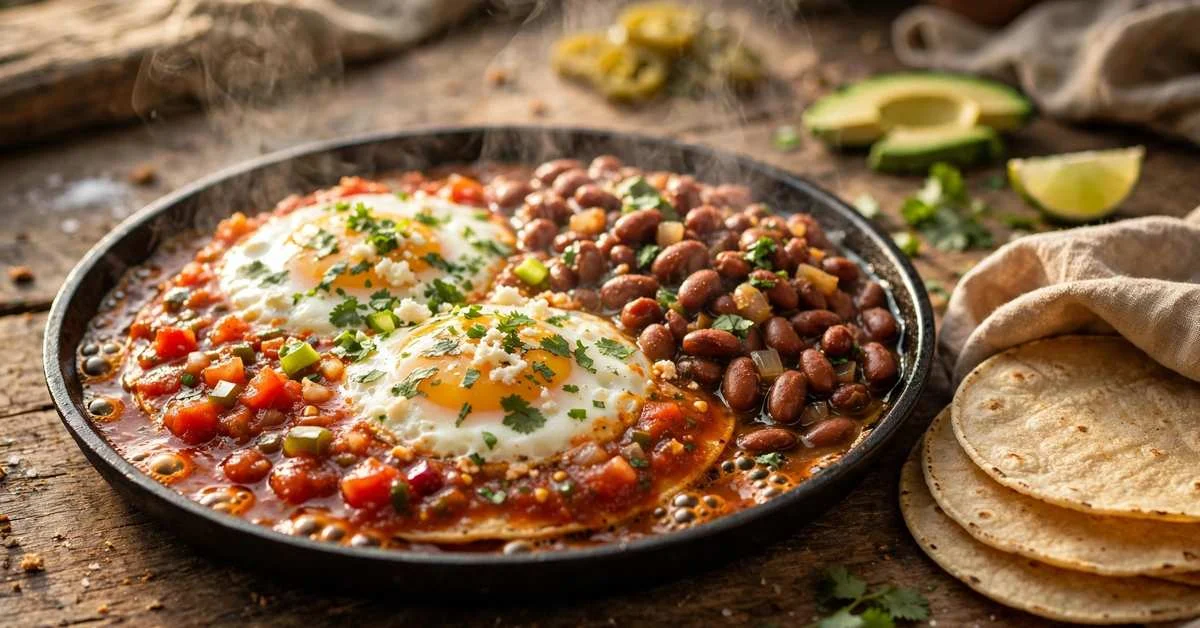
Huevos literally means eggs in Spanish. In slang, it means courage or guts, the same way English says someone has balls. One small word lives three lives: the breakfast on your plate, the bravery in your chest, and a whole factory of expressions that swing between the two. From huevos rancheros to tener huevos to estoy hasta los huevos, the word shows up everywhere once you start listening for it. This guide walks through all three lives, meets the word family of huevón and hueva, tours the regional differences from Mexico to Chile, and shows when the word is funny, when it is vulgar, and when it is both at once.
Life One: Breakfast
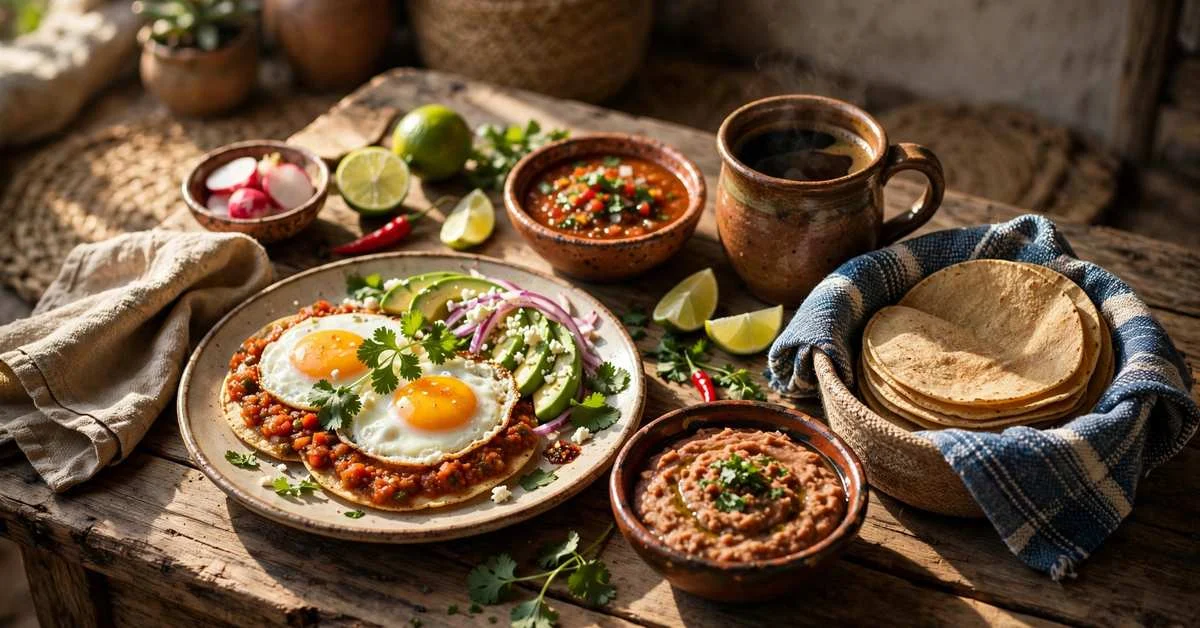
Every slang journey starts with the literal meaning, and huevos earns its place at the table honestly. Eggs anchor mornings across the Spanish-speaking world. In Mexico, huevos rancheros arrive smothered in salsa on warm tortillas, and huevos a la mexicana scramble with tomato, onion, and chile. In Spain, the tortilla de patatas turns eggs and potatoes into a national institution. Say huevos in a kitchen and nobody blinks. It is just food.
That innocent base matters more than it seems. Because the word starts clean, speakers can slide between the food meaning and the slang meanings without changing a single letter. The same word that orders breakfast can praise bravery five minutes later. Context is the only seasoning that tells you which dish you are getting. Keep the breakfast meaning in your pocket as the safe default. When in doubt about what someone meant, food is usually the answer.
Life Two: Courage
Now the word puts on its leather jacket. Tener huevos, literally to have eggs, means to have guts. It is the Spanish twin of the English phrase about having balls, and it works the same way. The logic runs through anatomy: testicles stand in for masculinity, masculinity stands in for boldness, and suddenly breakfast means bravery. Languages love this shortcut. English did it, Spanish did it, and neither one is giving it back.
The usage is everywhere. A friend who finally confronts a terrible boss tiene huevos. A skydiver stepping out of a plane needs huevos. A striker who takes the penalty kick in the final minute has them in abundance. Flip it negative and you get the challenge: no tener huevos means to lack the nerve, and telling someone they have no huevos is a direct dare to prove otherwise. Sports commentary runs on this fuel. When a player gives everything in a tough match, fans say puso huevos en el partido, he put his eggs into the game, meaning he left nothing behind.
The tuff overlap is real here. Both words turn hardness into praise. But huevos carries extra mischief, because the food meaning never fully leaves the room. That double vision is the joke and the power at once. You are talking about courage while technically talking about breakfast, and everyone knows it.
Life Three: The Expression Factory
Beyond courage, huevos powers a whole assembly line of expressions, each with its own charge. Echarle huevos and poner huevos both mean to put in serious effort, to give something your all. A coach tells the team to echarle huevos in the second half. A friend grinding through exams is poniéndole huevos. The eggs here are fuel, not anatomy. And then there is a huevo, the Mexican exclamation that turns the same root into a full-throated hell yeah.
Then the mood sours. Estar hasta los huevos means to be completely fed up, pushed past the limit. Estoy hasta los huevos de este trabajo is the sigh of someone done with their job. Me vale huevo shrugs even harder: I do not care, not even a little. And no tener ni un huevo flips the script toward money, meaning to be totally broke, without even one egg to your name.
Notice how far the word stretches. From bravery to effort to frustration to indifference to poverty, one root covers an emotional continent. That range is why the word feels so alive. It is not a single slang meaning but a toolkit, and fluent speakers grab whichever tool the moment needs. The based attitude of not caring what anyone thinks lives right next door to me vale huevo, and the family resemblance is obvious.
Meet the Family: Huevón, Hueva, and Friends
Huevos did not stop at expressions. It spawned relatives, and they have personalities of their own. Huevón is the big one. At its harshest it means a lazy, useless person, a real insult. But among male friends in Chile and Colombia it softens into a term of address, the way English speakers say dude or man. ¿Qué más, huevón? just means what is up, pal. Same word, opposite temperature. Only the relationship tells you which one you heard.
Hueva is laziness itself. Echar la hueva means to slack off, to waste the day doing nothing. It is the cozy cousin of the family, more funny than cutting. Then there is manda huevo, a Colombian favorite for moments of outrage. When someone behaves badly or something goes absurdly wrong, manda huevo lands like a verbal facepalm. It has nothing to do with actual eggs, despite what the words suggest. The Bogotá press once traced it to an old word for necessity, not the breakfast item, which only deepens the joke.
Learning the family matters because the members travel together. Hear huevón in a Chilean conversation and huevos is probably nearby. The root keeps echoing, and each echo teaches you something about how Spanish builds meaning by stretching one vivid image across a dozen situations.
The Regional Tour
Mexico treats tener huevos as everyday speech. It is blunt but normal, the kind of thing heard at family barbecues and soccer games alike. The courage meaning dominates, and most speakers reach for it without thinking twice.
Colombia runs the widest range. Manda huevo covers outrage, huevón covers both insult and buddy, and coastal speakers add their own twists. The word feels woven into the rhythm of daily complaint and daily affection at the same time. Chile leans hardest on huevón, which appears in practically every casual conversation among young men, sometimes as punctuation more than meaning.
Spain keeps it earthier. The idioms thrive, the food meaning stays strong thanks to the tortilla, and the vulgar edge never fully dulls. Everywhere, the rule holds: the more informal the setting, the more lives the word gets to live. Formal Spanish keeps huevos in the kitchen. Street Spanish lets it roam.
The Politeness Problem
Here is the honest warning. Huevos always carries a shadow of vulgarity, because the testicles meaning never fully clocks out. Among friends, at a match, or in a song, nobody cares. The word is funny, warm, and alive. But aim it at a formal dinner, a job interview, or a stranger you want to impress, and it lands like a dropped plate.
The test is simple. If abuela is in the room, stick to the breakfast meaning. If the room is all friends and the vibe is loose, the full toolkit is open. And never direct the anatomy-adjacent senses at someone you do not know well. The smh energy of estoy hasta los huevos is relatable, but relatability does not make it polite. Read the room first, crack the egg second.
FAQ
Does huevos always mean testicles? No. That is only one slang sense, and often not the intended one. Most of the time it means eggs, courage, or effort depending on the expression. The anatomy reading needs the right context to activate.
Is tener huevos vulgar? It is informal and a little edgy, but widely accepted among friends and in casual speech. It would be out of place in formal or professional settings, where a neutral word for courage works better.
What does estoy hasta los huevos mean? It means I am completely fed up. It expresses frustration with something that has gone on too long, like a bad job or an endless argument.
What is the difference between huevón and huevos? Huevos is the base noun, eggs, with its slang lives. Huevón is a derived form that usually describes a person: either a lazy or contemptible person as an insult, or just dude among close male friends.
Can women use these expressions? Absolutely. The expressions are used by everyone in casual speech. The anatomy logic behind them is masculine, but the usage long ago stopped caring about that.
Conclusion
Huevos is proof that the best slang words refuse to sit still. It starts as breakfast, becomes courage, multiplies into expressions for effort, frustration, indifference, and poverty, and raises a family of related words that each found their own fame. Few words in any language pack that much life into two syllables.
The deeper lesson is about how slang actually works. It does not invent meanings from nothing. It takes something everyone knows, like eggs, and stretches it until it covers something everyone feels, like fear or fed-up-ness. Learn the three lives of huevos and you are not just learning a word. You are learning the recipe Spanish uses to cook up meaning itself.

I’m Mason Reed, a language and communication writer at GrammerZones.com. I specialize in explaining English meanings, grammar concepts, internet slang, texting abbreviations & social media terms in a clear and practical way. My goal is to provide accurate, easy-to-understand content that helps readers confidently navigate modern language and online communication.