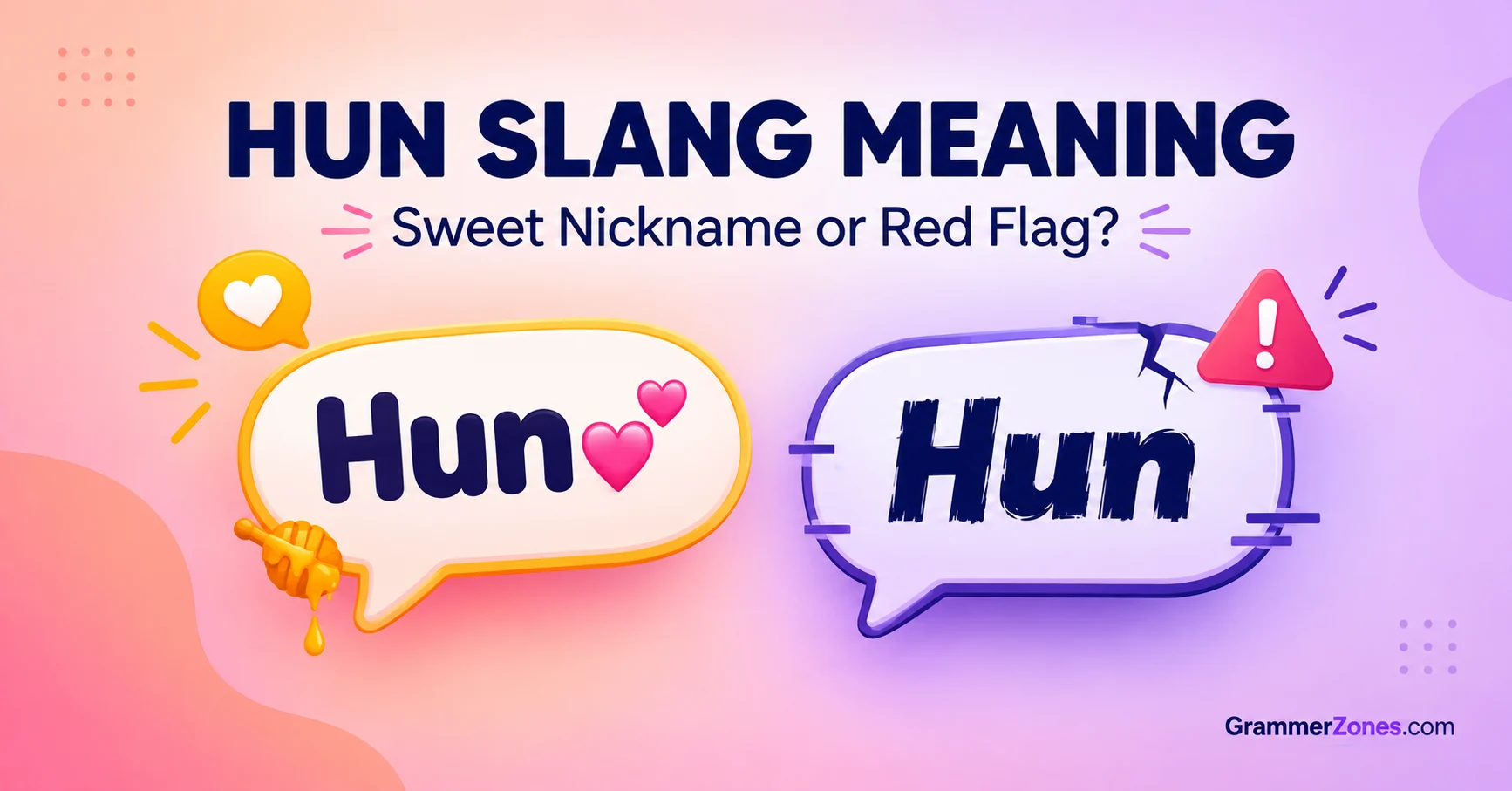
Short answer first: hun is a casual, affectionate shortening of honey but the same word can read as warm, flirty, sarcastic, or even loaded with sectarian and wartime history, depending entirely on who says it, where, and in what tone.
That gap between the simple definition and the lived reality is exactly why this term gets searched so often. Someone gets a hey hun text from a new match and wonders if it means interest. Someone else spots thanks hun!! under a suspiciously enthusiastic Facebook post and recognizes the MLM script instantly. A history buff stumbles on Halt the Hun in an old WWI poster and wants to know what it’s really referring to. Three completely different people, three completely different reasons for typing the exact same three letters into Google.
This guide walks through all of it: the sincere meaning, the sarcastic internet meaning, the historical and regional baggage, and how to actually read the word when it shows up in your own messages. No filler, no repeating the same sentence with a different keyword swapped in just a genuinely useful breakdown of a small word that carries a surprising amount of context.
What Hun Actually Means
In its most common form, hun is simply honey with the middle trimmed off an informal term of endearment, used the same way people reach for babe, sweetie, or love. It’s gender-neutral, low-stakes, and doesn’t automatically imply romance. A barista can say it to a customer. A grandmother can say it to a grandchild. A close friend can say it in a group chat and mean absolutely nothing more than familiarity.
Then there’s the version most people are actually curious about when they search this phrase: the sarcastic one. Over the last several years, hun picked up a second personality online shorthand for a very specific tone of forced, saccharine positivity, most associated with multi-level marketing sellers. Hey hun, just checking in about that opportunity 💕 is now instantly recognizable, and mocking it has become its own genre of online commentary. So when people ask what hun means, they’re often really asking: is this person being nice to me, or is this an MLM pitch?
And then there’s a third, older thread that has nothing to do with either of the above: Hun, capitalized, as in Attila the Hun a reference to the Huns of late antiquity. It’s an unrelated word that happens to share a spelling, and it’s responsible for a decent amount of the historical confusion around the term.
Where the Word Comes From
The affectionate use has been around long before the internet. Casual, friendly address terms hun, sugar, darlin’ are especially common in Southern American English, where strangers greet each other warmly as a matter of course. It’s a dialect habit, not a modern invention.
The historical version is a different story. During the First World War, Hun became a wartime slur British and Allied propaganda used for German soldiers, tying back to the ancient Huns as a way of painting German forces as brutal outsiders. Halt the Hun was a real recruitment-poster phrase from that era, a piece of history, not current slang, and worth knowing if you come across it in an old archive or documentary.
There’s also a usage worth naming carefully and briefly: in Scottish football, particularly around the Rangers–Celtic rivalry, Hun has been used as a sectarian nickname tied to Rangers’ historically Protestant fanbase. It’s contested and considered offensive by many people, and it’s mentioned here only because it’s a real, documented piece of regional slang history not because it’s a term worth using casually.
On a lighter note, drag and ballroom culture has its own friendly spin on the word used between performers much like sis or girl, as a term of camaraderie rather than romance. It’s one more reminder of how flexible this word has become.
How Hun Shows Up in Everyday Conversation
Context does almost all the work here.
In texting and chat, hun softens a message and signals familiarity hey hun, you around later? reads as friendly, not flirty, unless the rest of the conversation says otherwise.
In customer service and casual retail speech, it’s filler warmth here’s your change, hun extremely common in the American South and parts of the UK, and rarely meant as anything personal.
In the workplace, it’s usually best avoided. What feels friendly one-on-one can come across as too casual, or even a little condescending, in an email or a formal Slack channel.
In arguments or callouts, tone flips entirely. Well, hun… at the start of a reply is almost always a warning sign; it’s the internet’s version of a raised eyebrow, and it rarely precedes a compliment.
The Platform Difference: WhatsApp, Instagram, TikTok
The same word behaves differently depending on where you see it.
On WhatsApp, it’s usually sincere, a quick, affectionate sign-off between friends, family, or partners, closer to a habit than a statement.
On Instagram, hun thrives in comment sections as community-building shorthand gorgeous, hun! under a photo is meant as a compliment, full stop, especially in beauty and lifestyle spaces.
On TikTok, it’s mostly satire. Duets and stitches mocking hun culture, the exaggerated, overly sweet sales tone associated with direct marketing have turned the word into something close to a meme, recognizable on sight even without context.
If you’re trying to read a message and the tone feels ambiguous, check the punctuation and the emoji. Hun 😊 and a dry, standalone hun. are doing very different jobs.
A Quick Word on Unrelated Uses
Occasionally HUN shows up as an abbreviation in completely unrelated fields as a location or callsign code in aviation, for instance. These have no connection to the slang meaning at all; they’re just the same letters doing different work in a different industry, and worth a mention only so you don’t confuse the two if you stumble across one while researching the other.
Common Misconceptions, Cleared Up
A few things get misunderstood repeatedly:
- It doesn’t always mean romantic interest. Most of the time, it’s platonic closer to buddy than babe.
- It’s not always sarcastic, either. The MLM-mocking version is common online, but it hasn’t replaced the sincere, everyday use both exist side by side.
- It has no real link to Attila’s Huns. One comes from honey, the other from an ancient ethnic group. The overlap is spelling, not meaning.
- It’s not gendered. Men use it just as often as women, particularly in Southern or British English.
Similar Words and How They Differ
Hun, hon, and honey are essentially interchangeable; the spelling differences are just regional and generational habits, not different meanings. Compared to its cousins, hun sits in a pretty specific spot: warmer than a plain hey, more casual than sweetheart, and without the stronger romantic pull of babe. Sis and bestie lean more platonic and skew younger; darling leans older and slightly more formal. None of them carry the historical weight that capital-H Hun does.
How to Respond When Someone Calls You Hun
Mostly, you don’t need to do anything special.
From a friend or family member, mirror it back or just carry on the conversation normally. From a stranger or acquaintance, treat it as ordinary politeness and move on. If it feels pointed or sarcastic of the well, hun… variety it’s usually better addressed directly and calmly than matched with sarcasm of your own, which tends to escalate rather than resolve things.
In a dating context, if it feels flirty and you’re not sure, it’s completely fair to just ask. Reading tone through text is genuinely hard, and a quick wait, are you calling me hun now? 👀 usually gets a clear answer fast.
Frequently Asked Questions
What does it mean when a girl calls you hun?
Usually friendliness or comfort rather than a declared romantic signal though early in a dating conversation, it can lean flirty. Context and consistency matter more than the word itself.
What does it mean when a guy calls you hun?
Similar logic applies; it can be genuine warmth, casual habit, or mild flirtation. If he uses it consistently alongside other signs of interest, it’s probably not just a verbal tic.
Is thanks hun sarcastic?
Not necessarily. In person or between friends, it’s usually sincere. Online, especially under a comment that sounds like a sales pitch, it’s often read as a gentle jab.
What’s the MLM connection?
Hun became associated with multi-level marketing because of the recognizable tone many sellers use online, overly warm, emoji-heavy messages that often precede a pitch. The word itself is neutral; the pattern of use created the stereotype.
Is Hun the same as the WWI slur?
Related in origin, but functionally separate today. The wartime use was a specific, hostile term for German soldiers; the modern slang use is unconnected in everyday conversation and isn’t read as offensive in casual, friendly contexts.
Conclusion
The honest answer to what hun means is: it depends and that’s not a cop-out, it’s the actual, useful takeaway. The same word can be a grandmother’s habit, a friend’s casual sign-off, a stranger’s flirtation, an MLM red flag, or a hundred-year-old piece of wartime rhetoric, and the only real way to tell which one you’re dealing with is context: who’s talking, where, and how.
Next time hun lands in your inbox or your comment section, you’ll have a much better read on what’s actually being said and, just as usefully, what isn’t.
Discover More About
What Does Ph Mean in a Text? The Real Answer
GF Meaning: Chat, Gaming, Food, Football & Medical Uses
SP Meaning: What It Stands For in Text, Medical & Police Use

I’m Mason Reed, a language and communication writer at GrammerZones.com. I specialize in explaining English meanings, grammar concepts, internet slang, texting abbreviations & social media terms in a clear and practical way. My goal is to provide accurate, easy-to-understand content that helps readers confidently navigate modern language and online communication.


1 thought on “Hun Meaning Explained: Sweet, Sarcastic, or Something Else?”