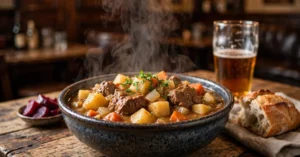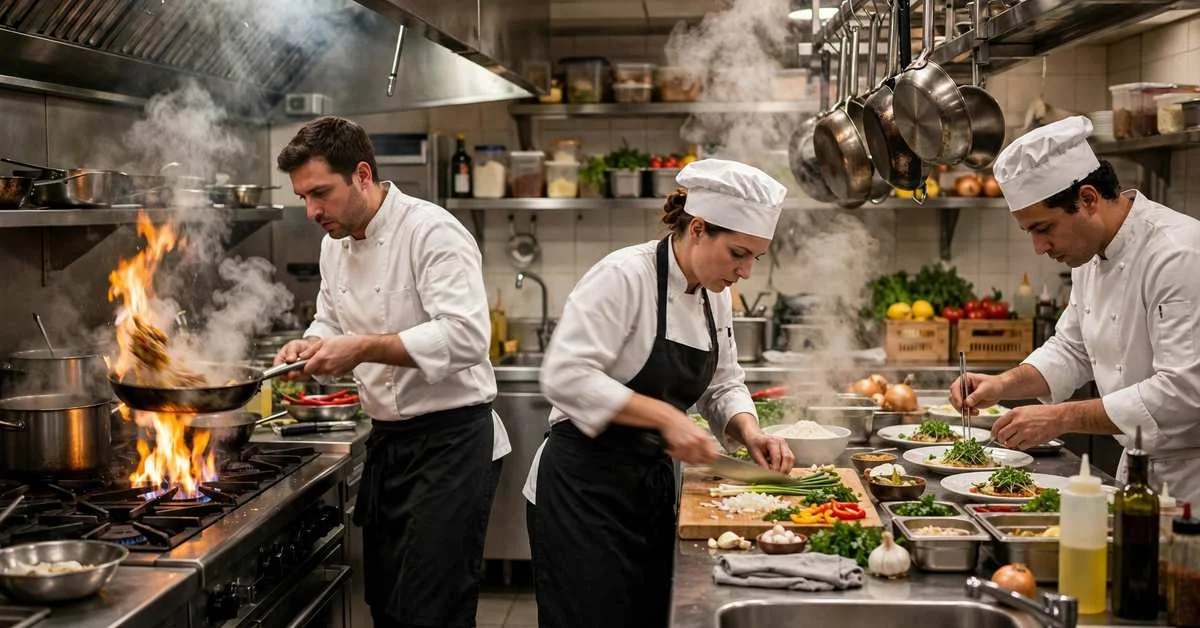
Kitchen slang covers two worlds at once. In restaurants, it is the secret code chefs shout across the hot line. At home, the kitchen is the heart of the house, the warm center where everyone ends up. Both meanings run on heat, speed, and people packed close together.
Most people meet the first meaning through cooking shows and the second through real life. You have heard a chef yell fire on TV, and you have stood in a crowded kitchen at a party, talking for hours without noticing. This article walks through both kitchens, the words chefs actually use, and the phrases that escaped into everyday speech.
By the end, you will know what the back of house calls mean, why the famous heat line stuck around, and how to drop kitchen talk without sounding like a TV chef.
The Two Kitchens
Every home has a kitchen, but no two kitchens work the same. The home kitchen is slow, warm, and personal. People cook, talk, and linger. Guests drift in from the living room and stay. Nobody planned it, but the kitchen always wins.
The restaurant kitchen is the opposite. It is loud, fast, and built like a machine. Chefs move in tight spaces with hot pans and sharp knives. Orders stack up on tickets. There is no room for small talk, so the crew invented a shorthand that sounds like a foreign language to outsiders.
Here is the fun part. Both kitchens taught the rest of us new words. The home kitchen gave us phrases about warmth and family. The pro kitchen gave us words about speed and pressure. When someone says the kitchen is heating up, the meaning depends on which world they live in.
The Secret Language of Pro Kitchens
Step into a professional kitchen during dinner rush and you will hear a stream of short, sharp words. This is kitchen slang at its purest. Every term exists to save time and prevent accidents.
Fire means start cooking a dish right now. When the head chef calls fire on table four, every cook knows the order just became urgent. The opposite is 86, which means cancel it. If the kitchen runs out of salmon, the salmon gets 86ed from the menu, and the servers have to break the news.
Hands is a call for help. A cook yelling hands needs someone to grab a hot plate or carry a tray this second. Heard means understood, and it doubles as a sign of respect. When the chef gives an order and the line answers heard, the whole team moves as one.
All day is the running total. If three tables ordered the same pasta, the count is three all day, and everyone adjusts. In the weeds means a cook is drowning in orders and cannot help anyone else. It is the kitchen version of being swamped, and every cook has been there.
Corner and behind are safety calls. A cook rounding a blind turn shouts corner. One moving past a coworker with a hot pan shouts behind. These two words prevent collisions, burns, and ruined dinners. The chit is the paper ticket with the order, the small piece of paper that runs the whole show.
To be honest, this language is beautiful in its own way. It is fast, clear, and built for teamwork. If you want the fuller picture of how people soften honesty in speech, the tbh guide covers that habit well.
Why the Kitchen Became the Heart
Long before restaurant slang existed, the kitchen was already the most important room in the house. In old homes, it was the only warm room. The fire burned there, the food came from there, and the family gathered around it. That habit never left us.
Think about any party you have been to. People start in the living room, then slowly migrate to the kitchen. Someone is cooking, someone is pouring drinks, and the conversation gets real. Text a friend wyd at a house party and the answer is almost always the kitchen.
The famous heat line captures this energy perfectly. If you cannot stand the heat, get out of the kitchen. It started as kitchen advice and became life advice. The message is simple. Pressure is part of the deal. If you want the good stuff, you have to handle the heat.
Grandmothers seem to understand this better than anyone. A grandma in her kitchen, calling everyone hun and pushing food on them, is running the original social network. No app, no algorithm, just warmth and snacks.

Phrases That Escaped the Kitchen
Kitchen words leak into everyday speech more than almost any other job slang. Too many cooks spoil the broth is the classic. It warns that adding more people to a job can make things worse, and it works for group projects, bands, and committees alike.
Everything but the kitchen sink means someone brought way too much. The image is funny because the sink is the one thing nobody would move. It shows up in packing stories, moving days, and overstuffed cars.
Cooking the books is the dark one. It means faking financial records, and it borrows the kitchen idea of mixing things up until nobody can tell what went in. Nobody in a real kitchen would approve of that recipe.
Then there is the pot calling the kettle black. Both sit on the same stove, both get sooty, and neither has room to judge. It is the kitchen way of saying look at yourself first.
Even the word kitchen itself became slang for a hot, intense place. When a situation feels heated and crowded, people call it a kitchen. And if something smells sus in the fridge, the whole house knows about it in minutes.
Using Kitchen Talk Without Getting Burned
Kitchen slang is fun, but context matters. Dropping pro terms like 86 and all day at a dinner party can sound forced. Save the back of house talk for actual cooking, or for friends who share the joke.
The home kitchen phrases are safer. Everyone understands too many cooks and the heat line. They are warm, familiar, and hard to misuse. They also age well, which is rare for slang.
One rule covers everything. If you have not worked a dinner rush, do not lecture real cooks about their own words. Appreciate the language, use it lightly, and let the pros keep their shorthand.
Frequently Asked Questions
What does 86 mean in kitchen slang?
It means cancel or remove. If a dish is 86ed, the kitchen is out of it and it comes off the menu for the night.
What does fire mean in a kitchen?
It means start cooking a dish immediately. When the chef calls fire, the order becomes the top priority.
Why is the kitchen called the heart of the home?
Because it was historically the warmest room, and people still gather there naturally. Food, warmth, and conversation pull everyone in.
What does in the weeds mean?
It means a cook is overwhelmed with orders and cannot take on anything else. It is the kitchen version of being swamped.
Conclusion
The kitchen earned its slang the hard way, through heat, speed, and crowds. Pro kitchens built a code that keeps people safe and food moving. Home kitchens built phrases about warmth, family, and too many cooks. Both kinds of kitchen talk ended up in our everyday speech because both describe things everyone understands. Pressure, teamwork, and the pull of a warm room. Next time you end up in a kitchen at a party, you will know exactly why you are there, and you will have the words to prove it.

I’m Riley Spencer. I track down the latest slang, memes, and viral phrases for grammerzones.com, explaining what they mean and how people actually use them, in plain simple words.