NFL stands for the National Football League, the top level of professional American football in the United States. When people say NFL in everyday talk, they usually mean the whole world around the league: the teams, the players, the Super Bowl, and the Sunday ritual of watching it all happen. It is one of those abbreviations that stopped being just initials and became a cultural landmark.
The league is more than a hundred years old now, and its story explains why three letters can carry so much weight. From a car showroom in Ohio to the biggest television event of the year, the NFL grew into something closer to a national holiday calendar than a sports schedule.
Born in a Car Showroom in 1920
On September 17, 1920, a group of team owners met in Canton, Ohio, in the showroom of a car dealership, and formed a new league. They called it the American Professional Football Association. Two years later it took the name it still carries: the National Football League. Pro football back then was rough, regional, and not very profitable. College football drew the crowds, and the pros were an afterthought.
Only two of those founding teams still exist. The Decatur Staleys became the Chicago Bears, and the Racine Cardinals became the Arizona Cardinals, which makes the Cardinals the oldest surviving franchise. Everyone else from that first meeting is long gone, folded or forgotten, but the league kept growing through the 1920s and 1930s as it got more organized.
The turning point came slowly and then all at once. A formal championship game started in 1933. After World War II, teams became more stable and more profitable, and television arrived just in time. The 1958 championship game, still called one of the most exciting ever played, showed America what pro football could look like on a screen. From there the league never looked back. By the time the Super Bowl era began in the late 1960s, the NFL was on its way to becoming the dominant sports league in the country.
How It Became an American Institution
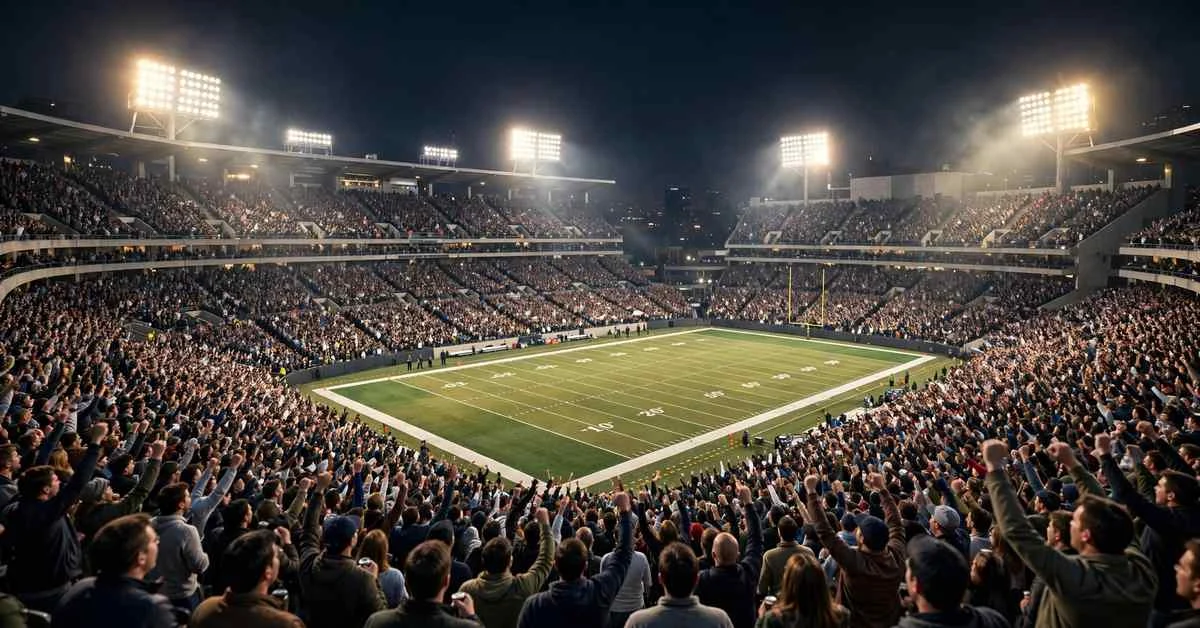
Today the NFL has 32 teams split into two conferences, the AFC and the NFC. Each team plays 17 games across an 18-week season that runs from early September into January, and the playoffs end with the Super Bowl in early February. That rhythm now structures the American autumn. Ask someone what they are doing on a fall Sunday and the answer is often already decided.
The Super Bowl is the crown jewel. It regularly ranks among the most watched television broadcasts of the year, and the commercials cost so much that the ads themselves became part of the show. People who never watch a regular season game still throw Super Bowl parties. Saying Super Bowl Sunday is like naming a holiday, and most Americans treat it like one.
What makes the league an institution, though, is not just the games. It is the rituals around them. Tailgating, the parking lot cookout before the game, turned fandom into a full-day event. Fantasy football turned millions of casual fans into armchair general managers who track players on teams they never cared about before. The draft, the yearly event where teams pick new college players, became its own television spectacle. The NFL stopped being something you watch and became something you participate in.
That participation is why the three letters work as slang. Saying NFL in conversation does not just name a league. It summons the couch, the snacks, the jersey, the group chat blowing up during the fourth quarter, and the Monday morning debates at work. It is shorthand for a shared American experience.
The Slang That Grew Around the League
A league this big grows its own language, and NFL talk leaks into everyday speech even among people who barely follow the sport.
The draft is the most famous export. Teams draft players, and now everyone drafts everything: fantasy teams, coworkers for a project, even friends for a road trip debate. Saying someone was a first round pick means they were the obvious top choice, and calling a decision a draft bust means it flopped badly. The language of team building became the language of choosing anything.
Tailgate escaped too. It started as the literal tailgate of a truck in a stadium parking lot, then became a verb for the whole pre-game party. Now people tailgate concerts, weddings, and election nights. Any outdoor gathering with coolers and folding chairs can earn the name.
Then there is the Hail Mary, the desperate long pass thrown with almost no time left. In everyday talk it means any last-ditch effort with long odds. Pitching a wild idea at the end of a meeting is throwing a Hail Mary. The phrase survived because everyone knows the feeling of needing a miracle.
Monday morning quarterback might be the most cutting piece of NFL slang. It means criticizing a decision after the outcome is already known, when it is easy to look smart. Nobody wants to hear that label, which is why it works so well as a gentle warning among friends.

How People Drop NFL Into Everyday Talk
You do not need to know every roster to use the letters naturally. Here is how they show up in real conversation.
- Planning a fall weekend around the games is the most common use. Saying it is an NFL Sunday explains the whole schedule: couch, snacks, and no interruptions until the evening games end.
- Comparing something to the NFL is a compliment about scale. Calling a local event the NFL of its niche means it is the biggest, most serious version of that thing.
- In group chats, NFL talk fills the gaps. Friends text wyd during halftime, argue about calls, and share clips before the broadcast even cuts to commercial.
- At work, football metaphors do heavy lifting. A manager might call a tough quarter a rebuilding year, borrowing the language of struggling teams. It softens bad news with a sports frame everyone gets.
- Calling a player tuff after a brutal hit is pure fan talk, and it shows how league slang and street slang feed each other.
The key is that NFL works as shared background. Even a tbh admission that you only watch the Super Bowl for the commercials still counts as participating. The league is so woven into the culture that opting out is itself a talking point.
NFL Questions People Actually Ask
What does NFL stand for? The National Football League. It is the professional American football league in the United States, founded in 1920 and now made up of 32 teams.
Why do people just say NFL instead of the full name? Because everyone knows what it means. The abbreviation is older than most fans, and the full name almost never appears in conversation. Saying the three letters is faster, and it carries the whole culture with it.
What is the Super Bowl? The championship game played each February between the winners of the AFC and NFC. It is the final game of the NFL season and one of the biggest television events of the year, famous for the game, the halftime show, and the commercials alike.
Do you need to be a big fan to talk about the NFL? Not at all. Millions of people follow it casually through fantasy leagues, office pools, or just the group chat. A yolo fantasy draft pick can teach you more about the league than a season of highlight shows.
What is the difference between the NFL and college football? The NFL is the professional league where players get paid. College football is the university game that feeds players into the NFL through the draft. Many fans follow both, and the college game has its own huge culture, but the NFL sits at the top of the pyramid.
Three Letters, One Hundred Years
The NFL began as a gamble in an Ohio car showroom and became the metronome of the American fall. The initials now mean the league, the season, the rituals, and the arguments, all packed into three letters. That is what an institution looks like in language form.
What is remarkable is how little the core product changed. It is still big athletes, a ball, and a field. Everything around it changed instead: the television deals, the fantasy leagues, the parties, the slang. The league learned to be a platform for other things, and that is why it outlasted every rival that tried to copy it.
So when someone drops NFL into a sentence, hear the full weight of it. It is not just a sports league. It is Sunday afternoons, parking lot cookouts, office debates, and a championship game that stops the country for an evening. Few abbreviations earn that kind of gravity. These three did.

I’m Riley Spencer. I track down the latest slang, memes, and viral phrases for grammerzones.com, explaining what they mean and how people actually use them, in plain simple words.