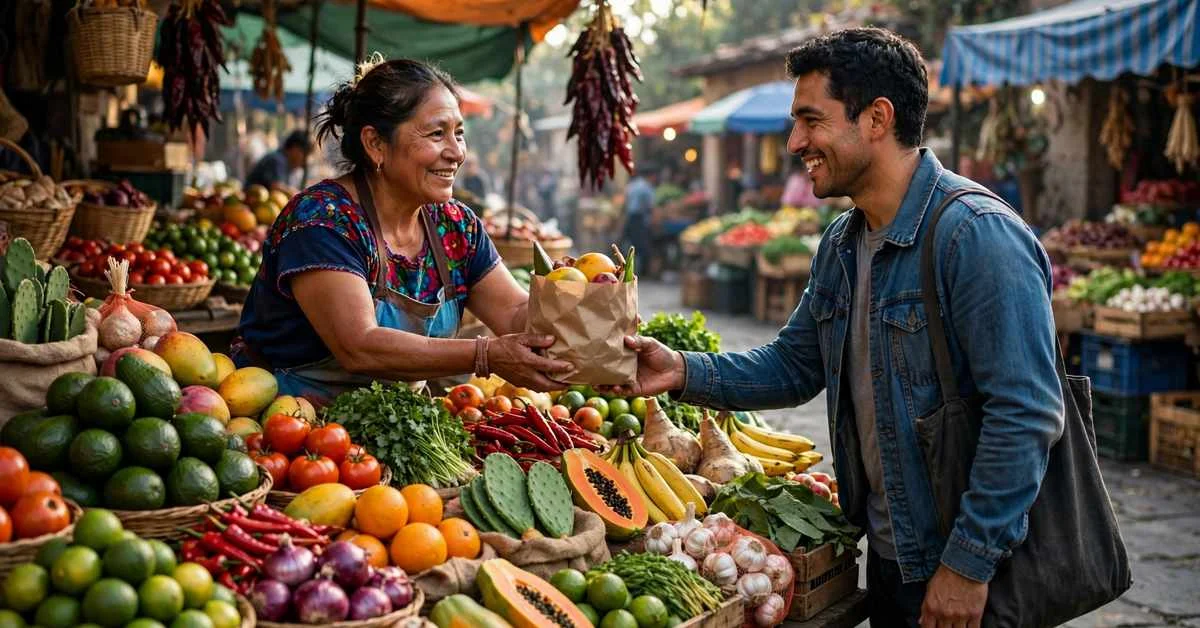
Pilon means a small bonus that a vendor gives you on top of what you already bought. In Mexican slang and market culture, it is the little extra, like a handful of bonus chiles tossed into your bag at the produce stand. You do not ask for it. You do not pay for it. It just appears, a small gesture that says the seller appreciates your business. The word even made it into American English dictionaries, defined as a bonus given with a large purchase, a trade, or a cash payment. But the dictionary definition misses the warmth. In Mexico, pilon is not a sales tactic. It is a tiny tradition of generosity, and once you know about it, you start noticing it everywhere.
What Pilon Actually Means
At its simplest, pilon is something extra. You buy a kilo of tomatoes, and the vendor drops in two more. You pay for a haircut, and the barber throws in a quick beard trim. The key detail is that you did not negotiate for it. A discount lowers the price. A freebie is the whole point. Pilon is neither. It is a surprise bonus that rides along with a normal purchase.
The word carries a feeling of goodwill. It turns a plain transaction into a small human moment. There is nothing bougie about it. No markup, no pretense, just a small human gesture. Regulars get pilon more often than strangers, because the gesture is really about the relationship. The vendor is saying, in effect, come back soon. And people do.
In parts of the southwestern United States, especially Texas, English speakers borrowed the word directly. Collins defines pilon in American English as something extra, giving lagniappe as the synonym. So the concept crossed the border along with the people who practice it.
A Morning at the Market
To understand pilon, picture a tianguis, the open-air street market found all over Mexico. It is early morning. Stalls stretch down the block, piled high with mangoes, avocados, nopales, and dried chiles. A shopper picks out peppers for salsa, chatting with the vendor about the weather, about family, about nothing in particular.
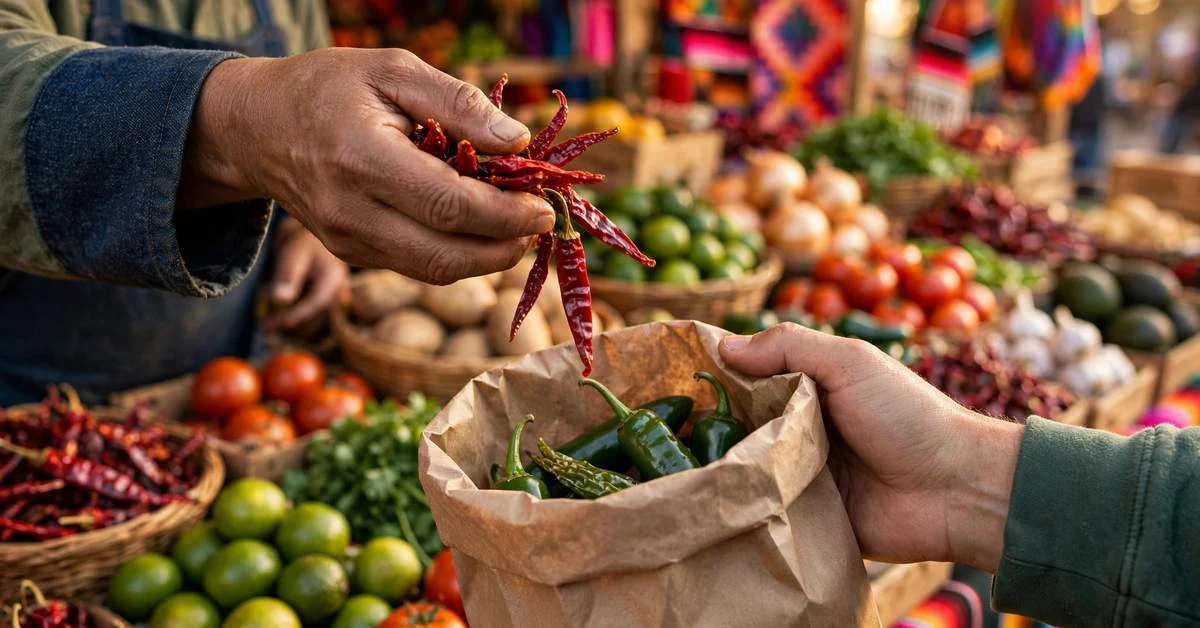
She pays. The vendor bags the peppers, then reaches into a crate and adds three extra chiles on top. No announcement. No receipt line for it. That is the pilon. It might cost the vendor a few cents. But it buys something worth far more, which is loyalty. Next Saturday, the shopper walks past three other pepper stalls and stops at this one.
This is why pilon matters more than its size suggests. It is commerce with a memory. The market remembers who was generous, and generosity gets rewarded with return visits, with recommendations, with the kind of word-of-mouth advertising no budget can buy. It is the most honest gas there is, praise that money cannot buy.
Pilon Is Not a Discount
People mix these up, so here is the clean breakdown. A discount reduces what you pay. Pilon adds to what you get. A tip is money you give to the seller. Pilon is value the seller gives to you. A free sample exists to make you buy. Pilon exists because you already bought.
The direction of the gesture is what makes pilon special. Discounts and samples flow toward making a sale happen. Pilon flows after the sale is done. It is backward-looking gratitude, not forward-looking marketing. That is why demanding pilon ruins it. The moment you ask, it stops being a gift and becomes a negotiation.
Think of it like the opposite of stunting. Stunting is loud showing off designed to get attention. Pilon is quiet generosity that expects none. Nobody posts about the two free chiles. They just smile and come back next week.
Where the Word Comes From
The etymology is a small journey of its own. Collins traces pilon to Mexican Spanish pilón, meaning literally a trough or mortar. That comes from Spanish pila, a basin or trough, which goes back to Latin pīla, a mortar. So the word started as a heavy stone vessel used for grinding.
How did a mortar become a bonus? The honest answer is that the path is a little hazy, as slang histories often are. One sensible theory is that the pilón, the big mortar, came to suggest abundance, a vessel so full it overflows. The overflow became the meaning. What spills over the top is the little extra.
What is certain is that the word is old in the region. English dictionaries date the American borrowing to around 1880 to 1885, which means Mexican vendors were practicing pilon long before anyone wrote it down. The concept is older than the slang.
Meet Lagniappe, the Louisiana Cousin of Pilon
Mexico does not own this idea alone. In Louisiana, French Creole culture has lagniappe, pronounced lan-yap, which means exactly the same thing, a small gift given with a purchase. Dictionary definitions of pilon literally list lagniappe as the synonym. Two cultures, two languages, one identical habit.
The parallel is not a coincidence. Both traditions grew out of market cultures where buying and selling were social events, not just transactions. In New Orleans corner stores and Mexican tianguis alike, the merchant-customer bond mattered. A little extra sealed it.
There is a lesson in the overlap. When two far-apart cultures invent the same word for the same gesture, the gesture is probably a deep human instinct. People like giving a little more than required. It feels good on both sides of the counter, in any language.
How to Handle Pilon Like a Local
First rule, never ask for it. Requesting pilon is like requesting a compliment. The asking destroys the thing. Vendors give it when they feel like it, usually to regulars, to friendly shoppers, or to anyone who made the transaction pleasant.
Second, always acknowledge it. A warm gracias goes a long way. In many markets, a smile and a see you next week matters more than the bonus itself. The vendor is investing in you. Show that the investment landed.
Third, do not confuse generosity with obligation. Some days there is no pilon. Produce runs short, margins run thin, and the vendor just sells what you paid for. That is completely fine. Pilon is a gift, and gifts are not owed. The shoppers who understand this are the ones who keep getting it.
Finally, pass it on. The spirit of pilon works anywhere. Rounding up a street food payment, leaving the change, tipping a little extra for great service, these are all pilon in spirit. The word may be Mexican, but the habit translates everywhere.
Pilon Beyond the Market
The word has started traveling beyond produce stalls. In business Spanish around the border, people use pilon for any sweetener in a deal, an extra month on a contract, a bonus feature tossed into a service package. The market meaning stays the core, but the metaphor stretches easily.
Young bilingual speakers use it playfully too. A friend who brings extra snacks to a party brought the pilon. A teacher who adds a bonus question that can only help your grade gave the class a pilon. The word keeps its warmth in every new setting. It always means someone gave a little more than they had to.
That flexibility is a sign of a healthy slang word. Pilon survived the jump from stone mortars to street markets to group chats because the feeling it names never goes out of style. Everyone understands the joy of getting a little more than expected.
Frequently Asked Questions
Is pilon the same as a tip? No. A tip is money you give the seller for good service. Pilon is extra goods the seller gives you. The generosity flows in opposite directions.
Can I ask a vendor for pilon? You can, but you should not. Asking turns a gift into a demand, and most vendors will find it pushy. The real move is to be a friendly regular and let it happen.
Is pilon used outside Mexico? Yes. It is common in Mexican-American communities, especially in Texas and the Southwest, where English dictionaries picked it up in the 1880s. The concept also exists under other names, like lagniappe in Louisiana.
Does pilon have other meanings? In standard Spanish, pilón can mean a large mortar or basin, and in some regions a sugarloaf or a drinking trough. The little-extra meaning is the slang sense, and it is the one most people mean in conversation.
Conclusion
Pilon is a small word carrying a big idea, that commerce works better with a little kindness mixed in. From the Latin mortar to the Mexican market stall to the Texas corner store, it has always meant roughly the same thing, a bit more than you paid for, given freely. It is not a discount, not a trick, not a marketing ploy. It is a vendor saying thank you in the language of extra chiles and bonus fruit. In a world of fees, surcharges, and shrinking portions, pilon points the other way. It is proof that the little extra never went out of style. It just needed a name.

I’m Andrew West, a content writer at GrammerZones.com, specializing in high-ranking grammar blogs and modern language trends. I simplify complex grammar and decode Gen Z and Gen Alpha slang to make communication clear, relevant, and engaging.