Wu Tang slang meaning: the legendary hip-hop collective from Staten Island, New York, formed in 1992 and named after the 1983 kung fu film Shaolin and Wu Tang. In everyday slang, the name stands for legendary status. Calling something wu tang means it carries raw authenticity, elite skill, or the gritty spirit of the group.
You hear it in music talk, in streetwear, and in the W hand sign fans throw up at shows. The name traveled far beyond rap. It became shorthand for a whole philosophy: stay sharp, stay loyal, and never soften your edge. To understand the slang, you have to start with the film that started it all.
The Film That Named a Legend
In 1983, a Hong Kong martial arts film called Shaolin and Wu Tang hit theaters. It starred Gordon Liu and told the story of a fierce rivalry between two kung fu schools: the Shaolin temple and the Wu-Tang clan. Sword fights, betrayals, honor codes. It was exactly the kind of movie that played in grindhouse theaters in New York.
Two young men from Staten Island watched it there. Robert Diggs, who would become RZA, and Russell Jones, who would become Ol Dirty Bastard, were obsessed with kung fu cinema. Growing up, they saw something in those films that spoke to their own lives: discipline under pressure, loyalty between brothers, and battles fought with skill instead of guns. They decided the name of their future group on the spot.
The choice was deeper than a cool title. The members later invented backronyms for the letters, playful phrases that gave the name extra layers of meaning. But the root never changed. It came from that one film, the rivalry of two schools, and the idea that a crew with a code could take on the world.
Nine Swords From Staten Island
In 1992, RZA pulled together nine rappers from the Park Hill projects of Staten Island. The lineup was RZA, GZA, Ol Dirty Bastard, Method Man, Raekwon, Ghostface Killah, Inspectah Deck, U-God, and Masta Killa, who joined a year later. Each one had a distinct voice and a kung fu inspired alias. Together they were a small army.
The group blended three worlds that had never fully met in rap. Eastern philosophy came from the kung fu films. Comic book energy came from their love of superheroes and villains. And the Five Percent Nation teachings they had picked up in New York gave them a framework of knowledge, wisdom, and self-mastery. The result was dense, cryptic, brilliant lyricism over beats that sounded like nothing else.
Staten Island even got a new nickname out of it. The group started calling it Shaolin, after the temple in the films. Fans followed. To this day, hip-hop heads know exactly what Shaolin means on a map of New York.
The Code: Business as Warfare
What made Wu-Tang truly revolutionary was not just the music. It was the business plan. RZA designed it like a general planning a campaign.
The group signed together to one label, Loud Records. But the deal had an unheard-of clause: each member was free to sign solo contracts with different labels. Method Man went to Def Jam. Ghostface Killah went to Sony. Raekwon stayed with Loud. GZA went to Geffen. Every deal still fed the larger brand, and every solo album carried the Wu-Tang flag.
The strategy worked beyond what anyone hoped. Solo records sold millions. The members became stars in their own right while the clan stayed intact. The phrase fans use for it says everything: Wu-Tang is forever. It was a brotherhood with a contract, a crew that figured out how to win as individuals without breaking apart.
Enter the 36 Chambers
The debut album arrived in 1993 with a title built like a puzzle. Enter the Wu-Tang (36 Chambers) mashed together three films: Enter the Dragon, Shaolin and Wu Tang, and The 36th Chamber of Shaolin. The cover showed the members in masks, like warriors. The music sampled dialogue straight from the English dubs of kung fu movies.
RZA produced the whole record with a sound nobody had heard. Sparse drums, eerie piano loops, distorted soul samples. It was raw and slightly unpolished on purpose. The imperfections were the point. In an era of slick commercial rap, the album sounded like it came from the street itself.
The singles became anthems. Protect Ya Neck introduced all nine voices at once. C.R.E.A.M. turned a street proverb about money into one of the most quoted choruses in rap history. By 1997, the follow-up Wu-Tang Forever hit number one on the Billboard 200. The clan had gone from the projects to the top of the charts without changing a thing about themselves.
What Wu Tang Means in Slang Today
Today the name works as slang in a few clear ways. The most common is as a stamp of legendary quality. A producer with wu tang level beats is operating at the highest tier. A crew that moves like wu tang is tight, loyal, and dangerous in the best sense.
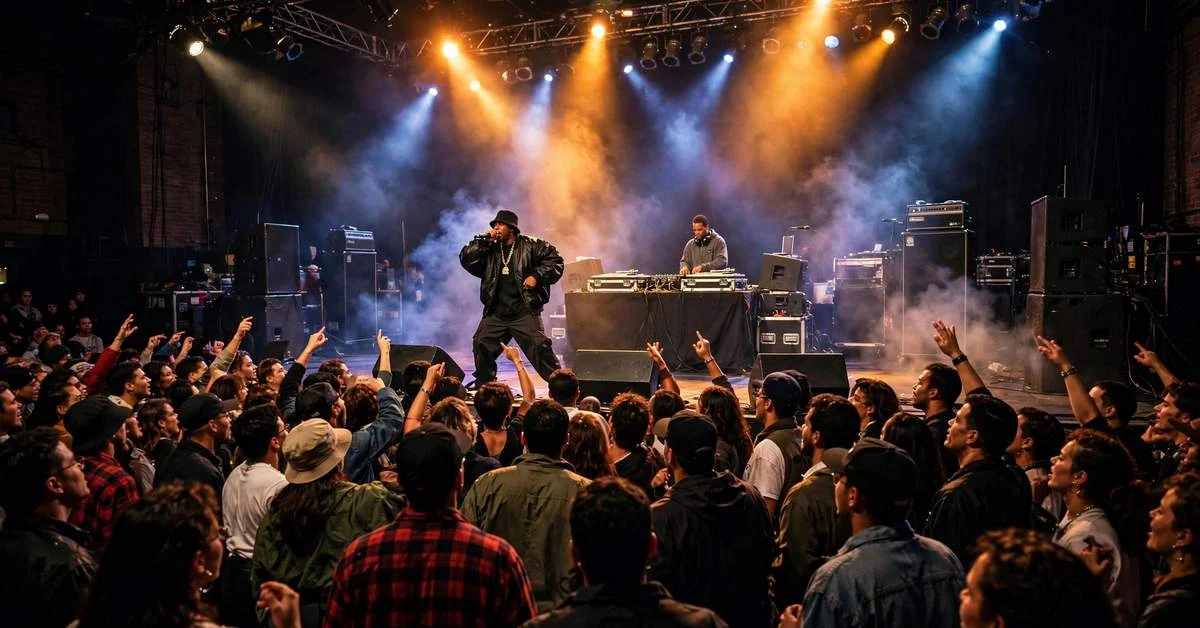
The W hand sign is part of it too. Fans throw it up at concerts the way rock fans throw horns. It signals membership in something bigger than a fanbase: a shared code.
The aesthetic spread everywhere. Streetwear brands borrow the logo style. Filmmakers sample the sound. RZA himself went on to score films and direct his own martial arts movie. And in 2015 the group released an album called Once Upon a Time in Shaolin in a single physical copy, turning scarcity into art. The move was pure Wu-Tang: bold, strange, and impossible to ignore.
If you want more rap history, the clan sits at the center of the East Coast story. Their influence runs through everyone from Nas to modern underground crews.
Frequently Asked Questions
Why is it called Wu-Tang?
The name comes from the 1983 kung fu film Shaolin and Wu Tang. RZA and Ol Dirty Bastard picked it after watching the movie, seeing parallels between martial arts battles and rap battles.
What does wu tang mean in slang?
In slang it means legendary, authentic, or elite. It can describe music, a crew, or a mindset. It carries the spirit of the group: skilled, loyal, and uncompromising.
Who are the members of Wu-Tang Clan?
The core nine are RZA, GZA, Ol Dirty Bastard, Method Man, Raekwon, Ghostface Killah, Inspectah Deck, U-God, and Masta Killa. Ol Dirty Bastard died in 2004. Cappadonna is closely affiliated.
What is the W hand sign?
Fans form a W with their fingers to show love for the group. It is the signature gesture of the clan, seen at concerts and in photos across hip-hop culture.
Conclusion
Wu-Tang Clan took a kung fu film title and turned it into one of the most powerful names in music. The code they built, nine distinct voices under one banner, each free to shine alone, changed how the industry worked. The sound they made, gritty and cinematic, changed how rap sounded.
That is why the slang endures. Saying wu tang is not just naming a group. It is invoking a standard. Raw skill. Total loyalty. Zero compromise. More than thirty years after nine kids from Staten Island named themselves after a movie, the name still means the same thing it always did: legends only.

I’m Riley Spencer. I track down the latest slang, memes, and viral phrases for grammerzones.com, explaining what they mean and how people actually use them, in plain simple words.