1960s slang is the sound of a decade splitting in two. Every word from that era carries the tension between the old rulebook and the new rebellion. Say groovy and you hear the party. Say square and you hear the insult. Say bread and you hear the hustle. This is not a dictionary page. It is a guided tour through the words that defined the sixties, room by room, with a stop at each corner of the culture. By the end you will know the key words, what they reveal about the era, and how to drop one into conversation today without sounding like a costume.
Stop One: The Greeting Words
Every tribe needs a hello, and the 60s had two great ones. Hip meant cool, aware, and in the know. It came from jazz slang and became the highest praise of the decade. If something was hip, it mattered. If a person was hip, they belonged.
Dig it was the other password. It meant to understand or to enjoy, sometimes both at once. A new record came on, someone nodded and said they could dig it, and the room knew exactly what that meant. The phrase also worked as a test. Asking can you dig it was really asking if you were one of them.
These were gatekeeper words. They sorted the insiders from the outsiders in a single syllable, and that sorting was the whole point of 60s slang.
Stop Two: The Party Words
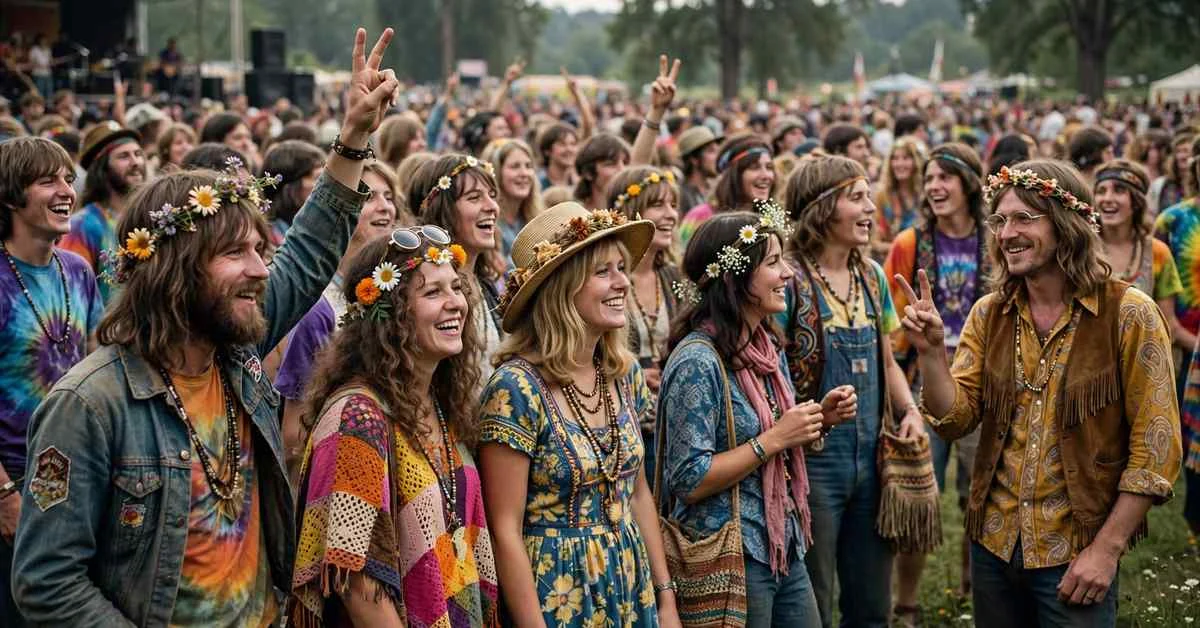
No decade partied harder in language than the 60s. Groovy was the crown jewel, meaning excellent or wonderful. It started in jazz clubs, describing music with a great rhythm, then hippies carried it everywhere. A groovy night was the best possible night.
Far out was the cosmic upgrade. It meant amazing, but with a sense of wonder attached. A far out idea was not just good. It bent your mind a little. The phrase became the hippie seal of approval for anything mind expanding.
Crash meant to sleep over, usually on a couch or floor after a long night. Blitzed meant drunk or high, out of it in the happiest way. Together these words mapped the entire arc of a 60s evening, from arrival to aftermath.
The party vocabulary never really died. It just changed clothes. If groovy was the 60s seal of approval, the modern version is gas, the word people use today to hype something up.
Stop Three: The Insults
Every slang era needs its villains, and the 60s drew them sharply. Square was the ultimate insult, aimed at anyone conventional, cautious, and out of touch. It accused a person of being on the wrong side of history.
Flake was softer but still sharp. It meant someone weird or unreliable, the friend who promised to show up and never did. Egghead was the sarcastic label for a studious type, said with a smirk rather than respect.
Notice the pattern. The insults all punished the same crime: failing to be loose, spontaneous, and present. The decade had a radar for outsiders, and it never switched off. That radar still exists today. It just has a new name: sus, the modern word for flagging someone who does not fit the scene.
Stop Four: The Money and Hustle Words
Even rebels needed cash, and the 60s renamed it. Bread meant money, plain and simple. The word made earning sound warmer, like something baked and shared rather than counted.
Bag was the clever one. As a noun it meant your thing, your occupation or obsession. Music was his bag. Painting was her bag. As a verb it meant to steal or grab, which gave the word a double life depending on the sentence.
These words show a generation trying to make work feel personal. A job was not a job. It was your bag, the thing that defined you. The hustle got a rebrand before rebranding was a word.
Stop Five: The Rebel Words
This is where the decade let its hair all the way down. Freak out meant to lose control, usually from excitement or shock. A surprise party could make you freak out in the best way.
Heavy meant deep or serious. A heavy conversation was one that mattered. A heavy scene was one with real weight to it. Bummer was the crash landing, a word for disappointment that still gets used today.
Cop-out was the ultimate rebel accusation. It meant a lame excuse, a dodge, a refusal to commit. Calling something a cop-out was a way of demanding courage from people who were playing it safe.
The rebel vocabulary celebrated going all in. That spirit of living loud has a modern heir: yolo, the word for acting without overthinking the consequences.
What Each Word Reveals About the 60s
Put the words together and a portrait appears. The 60s valued freedom over security, which is why bread got a warm nickname and cop-out became an insult. The decade valued authenticity over polish, which is why square was the worst thing you could be called.
The words also reveal a deep suspicion of authority. Egghead mocked book learning. Flake mocked reliability. The highest praise went to spontaneity: groovy, far out, hip. The culture was voting with its vocabulary, and it voted for the loose over the tight every time.
There is also honesty in the list. The decade prized saying the bold thing out loud, a habit that survives every time someone opens with a blunt tbh today. Different era, same appetite for straight talk.
How to Use 60s Slang Without Sounding Like a Costume
The trick is restraint. One 60s word in a sentence is charming. Five is a Halloween outfit. Pick the word that fits the moment and let it stand alone.
Groovy works best with a smile, aimed at something genuinely delightful. Far out fits moments of real surprise. Bummer still works perfectly for small disappointments, and most people will not even clock it as vintage.
Timing matters more than accuracy. Dropping dig it after a friend explains their weekend plans lands well. Using it in a work meeting does not. The words were born in casual, joyful settings, and that is where they still belong.
FAQ
What is the most famous 1960s slang word?
Groovy takes the crown. It traveled from jazz clubs to hippie communes to comedy films, and it still gets recognized instantly today.
Why did 60s slang spread so fast?
Music, television, and youth culture all exploded at once. Rock bands, movies, and campuses carried the words across the country in months, not years.
Do people still talk like this?
A few words survived. Bummer, crash, and freak out are still in daily use. Most of the rest live on as retro flavor.
What 60s words do we still use without noticing?
Crash for sleeping over, bummer for disappointment, and heavy for something serious all came from the 60s and never left.
Was 60s slang only an American thing?
Mostly, yes. It grew out of American jazz, rock, and counterculture. Britain had its own parallel slang, but the American words traveled further through music and film.
Conclusion
The 1960s did not just invent words. They invented a way of sorting the world into hip and square, free and uptight, groovy and bummer. Each word on this tour was a small rebellion, a vote for spontaneity over the rulebook. That is why the slang still charms us. It carries the sound of a generation deciding, out loud, to live differently. Borrow a word or two, use them with a smile, and you are keeping a small piece of that rebellion alive.

I’m Andrew West, a content writer at GrammerZones.com, specializing in high-ranking grammar blogs and modern language trends. I simplify complex grammar and decode Gen Z and Gen Alpha slang to make communication clear, relevant, and engaging.