Square was the 1960s word for a person who was hopelessly uncool. It described someone who followed every rule, feared every risk, and laughed at none of the jokes. Calling a person square was not light teasing. It was a verdict that placed them outside the world of rock and roll, long hair, and late nights. Below we trace where the insult came from, why it cut so deep, and how the war between hip and square shaped a generation.
Where Square Came From: A Jazz Club Insult
The word square did not start in the 1960s. It started in the jazz clubs of the 1940s, where musicians needed a name for people who simply did not get the music. The first known written use dates to 1944. A square was someone whose tastes were out of date and out of touch, the kind of listener who wanted safe melodies while the band was inventing something wild.
One popular theory says the word came from the stiff, boxy hand movements of a classical conductor keeping a rigid four-beat rhythm. Jazz players bent notes and broke rules. The conductor stayed inside the lines. The shape said it all.
Jazz slang already had a perfect opposite for square. That word was crazy, which meant excellent. In that world, crazy was hip and square was unhip. The pair showed how jazz musicians flipped normal values upside down. What the outside world called strange, they called great. What the outside world called respectable, they called square.
By the time the 1960s arrived, the insult had escaped the clubs. Teenagers picked it up, and it became the standard label for anyone stuck in the old ways.
Why Being Called Square Hurt So Much
Square stung because it was never just about fashion. It carried a moral charge. To call someone square was to accuse them of being dull in spirit, not just in clothes. It said: you are afraid of life.
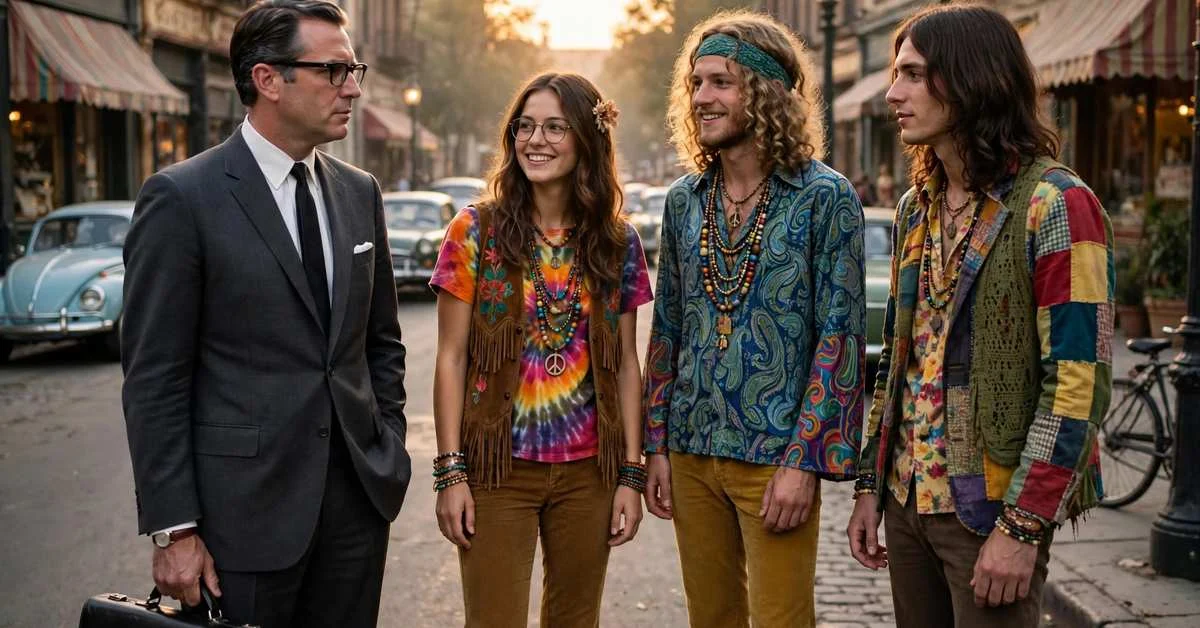
The historian Lewis Erenberg once described the square as the middle class figure obsessed with work, ruled by a strict moral code, and closed off to other races and ideas. The youth of the 60s agreed with that picture. When they said square, they meant a whole package: the 9 to 5 job, the neat lawn, the suspicion of anything new.
That is why the word worked as a weapon. It did not attack what you wore. It attacked who you were. A bad haircut grows out. A square label stuck, because it claimed something about your character.
It was also blunt in a way that left no room for softening. Dropping the word on someone had the same direct hit as a modern tbh in a group chat. No smile, no joke, just the verdict.
The Hip vs Square Divide: Two Tribes
The 1960s ran on a simple split. On one side stood the hip, the people in the know. On the other stood the squares. Hip meant you understood the music, the slang, and the attitude. Square meant you did not, and probably never would.
Slang itself was the border wall between the tribes. Words like dig it worked as passwords. If you used them right, you belonged. If you stumbled, you exposed yourself as a square within seconds. No test was written down, but every teen knew the rules.
Parents made perfect squares in the eyes of their kids. The generation gap was real, and language marked it. Dad in his suit talking about responsibility was the living definition. The kid with the record player and the slang dictionary was the opposite.
This divide explains why the insult mattered so much. In a decade when youth culture was exploding, being hip felt like being on the right side of history. Being square felt like being left behind by it.
Be There or Be Square: The Phrase That Went Mainstream
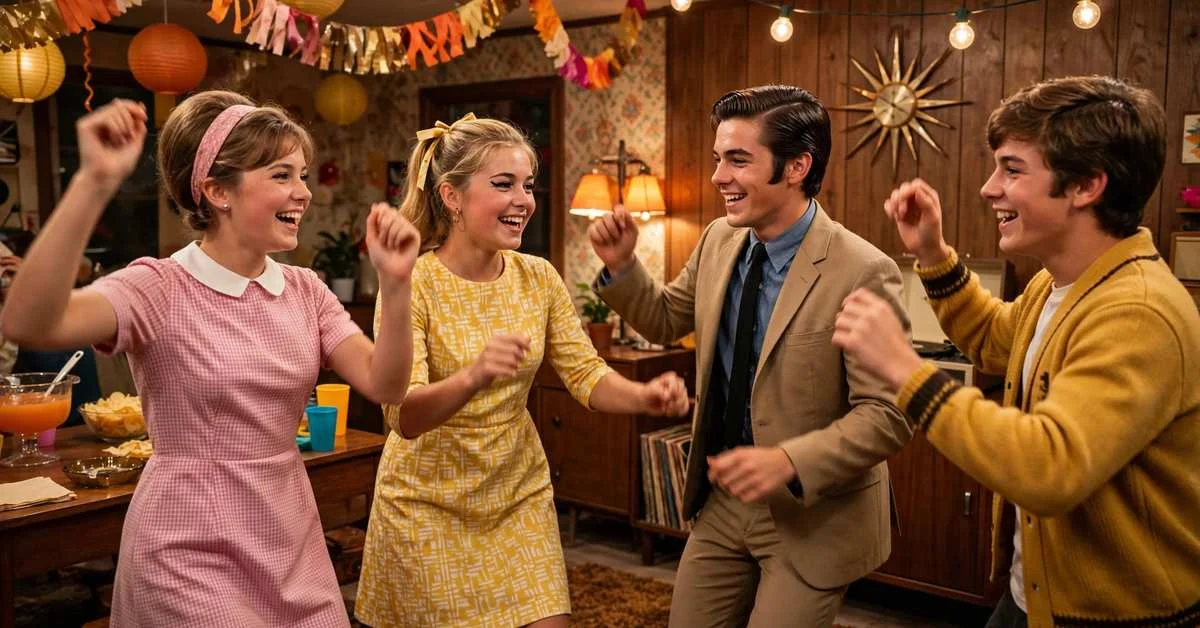
Somewhere along the way, the insult softened into an invitation. Be there or be square started appearing on party flyers, school dance posters, and event ads. The message was simple: show up, or admit you are no fun.
The phrase worked because everyone already knew the sting of the word. Turning it into a joke took away some of its power. A host could print it on an invitation and get a laugh instead of starting a fight.
This is also how square survived long after the 60s ended. The insult itself faded, but the phrase lived on. Even people who never called anyone square in their lives have seen those five words on a poster.
How to Spot a Square in 1965
The kids of the 60s had a mental checklist, and it went far beyond clothes. A square had the short back and sides haircut when everyone else was growing it out. A square talked about the office at parties. A square danced like the music was a math problem.
But the real test was attitude. Squares asked why. Hip people asked why not. A square wanted the evening planned. Everyone else wanted the evening to happen.
Slang mistakes gave squares away fastest. Using a hip word wrong was worse than not using it at all. It proved you were an outsider trying to pass, which was the most square thing of all.
The instinct behind the checklist never died. Every generation builds its own radar for outsiders. Today that radar has a name: sus, the modern word for flagging someone who does not fit the scene.
What Replaced Square: Words We Use Now
Languages always need a word for uncool, so square got replaced, not retired. In the 80s and 90s, lame took over the job. Later came basic, aimed at people with dull, predictable taste. Each new word does the same work square once did.
The opposite of square changed too. The 60s prized the risk taker, the person who said yes to the unknown. That spirit now has its own modern label: yolo, the word for living loud without overthinking.
What stayed the same is the need. Every era draws a line between the in crowd and the out crowd, and every era needs one sharp word to point at the wrong side of it. Square was simply the 60s version, and it did the job perfectly.
FAQ
Is calling someone square offensive?
In the 60s it was a real insult. Today it sounds retro and mostly lands as a joke. Context and tone decide how it lands now.
Where did be there or be square come from?
It grew out of 1960s youth slang as a playful twist on the insult. Party hosts and advertisers picked it up because the rhyme made it memorable.
Do people still say square?
Rarely as an insult. The full phrase be there or be square still shows up on invitations and posters, which keeps the word alive.
What is the opposite of square in 60s slang?
Hip. A hip person was in the know about music, style, and attitude. Crazy was another jazz era opposite, meaning excellent.
Was square only a 60s word?
No. It started in 1940s jazz slang and peaked in the 60s. The decade just made it famous with a whole generation of teenagers.
Conclusion
Square worked as an insult because it named a fear every 60s kid shared: the fear of turning into their parents. It was never really about haircuts or hemlines. It was about the terror of a life with no risk, no music, and no surprise. The hip versus square divide gave the decade its energy, and the word gave that divide its sharpest edge. Next time you see be there or be square on a poster, remember what it once meant. It was not an invitation. It was a warning about which side of history you wanted to stand on.

I’m Ryan Hayes. On grammerzones.com, I write clear, no-nonsense guides to slang and everyday expressions. So the next time a word confuses you, you’ll find the answer here.