Hip means aware, informed, and up to date. When someone calls you hip, they are saying you get it: you know what is going on, you catch the reference, and you are not behind the times. The word grew up in Black American speech in the early 1900s and became the badge of honor of the jazz scene in the 1930s and 1940s. It has a twin, hep, and the two have argued over the same job for more than a century. You will hear hip in music, in movies, and in everyday talk like I am hip to that new show. This article settles the hip vs hep question and shows how one short word became a permanent part of American English.
Hip vs Hep: The Spelling War That Never Really Ended
For years, hep and hip were used interchangeably, and both meant the same thing: in the know. Hep showed up in print first, in the early 1900s, with hip close behind. Jazz musicians in the 1920s and 1930s said hep. A stylish insider was a hep cat. Then, in the 1940s, the same musicians switched to hip, and hip never looked back.
The switch was not about spelling rules. It was about identity. By the late 1930s, hep had gone mainstream. Radio hosts said it. Newspaper columnists said it. Even your grandmother might have said it. Once everybody was hep, the word stopped marking anybody as special. Jazz players needed a fresh code word, so they picked hip, the quieter twin, and made it their own. A few years later, pianist Harry Gibson even cut a record declaring hep was out, spelling out the changing of the guard in song.
So which one is correct today? Hip won. Hep survives mostly as a vintage flavor, the way old cars survive in parades. If you say hep now, people hear a history lesson. If you say hip, people hear right now.
The Awareness Badge: What Being Hip Actually Meant
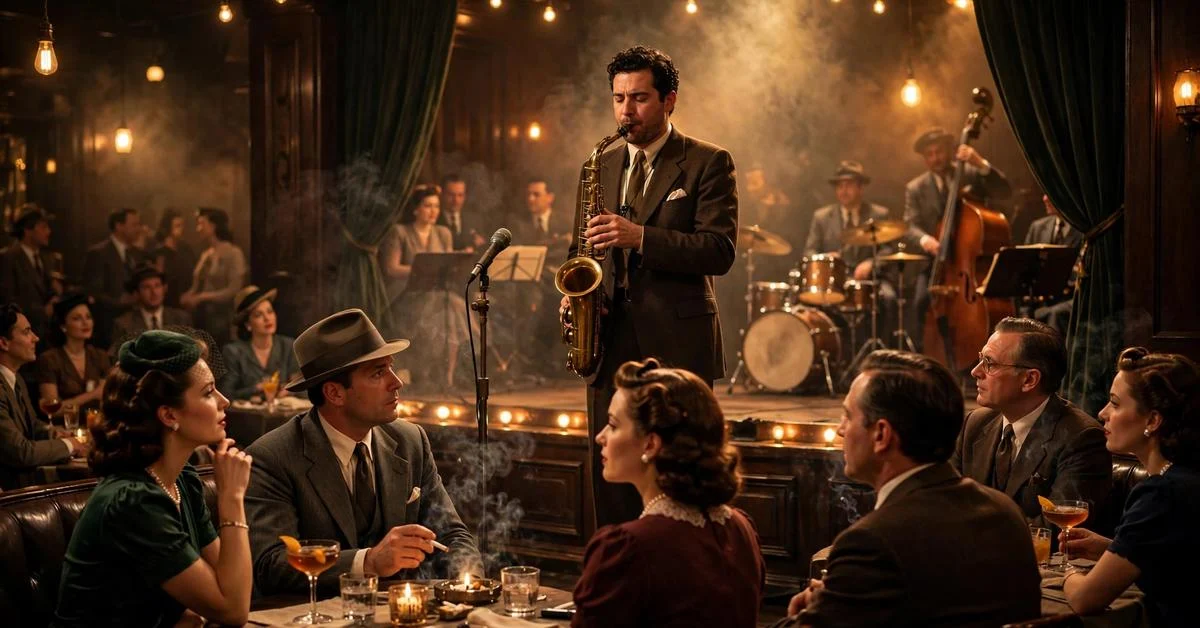
Hip was never just a synonym for cool. Cool is about style. Hip is about knowledge. To be hip was to have your eyes open: you knew the music, you knew the talk, you knew the unwritten rules of the room. A burning sax solo was hip the way a hard beat is gas today, not because it was loud but because the people who mattered recognized it.
The badge could not be bought. Hip was never about money. A young player in a cheap suit could be hipper than a bougie club owner with a full wallet, because hip measured what you knew, not what you owned. That is why the word stuck around in Black American culture first: it described a kind of street-level wisdom, the ability to read a situation fast and act right.
Being hip also meant being early. The hip person heard the record before it was a hit, caught the joke before the punchline, and saw the trend before it had a name. In the 1930s, that might have meant knowing which band was about to break out. Today it might mean knowing which show everyone will be talking about on Monday. The setting changed. The badge did not.
And the badge had a verb form, which made it even more useful. Since the 1930s, to hip someone has meant to inform them, to let them in on the secret. Hip me to the plan. He hipped me to that restaurant. The word did not just describe awareness. It spread it.
The In-Group Test: Hip or Square?
Every badge needs a gate, and hip had one: the square. A square was the opposite of hip, someone out of touch, stiff, and clueless about the scene. Jazz slang ran on this pair the way a light switch runs on on and off. You were either hip or you were square, and everybody in the room could tell which one you were within a minute.
The test was social, not written. Say the wrong thing, miss the reference, or laugh at the wrong moment, and the room knew. A poser who faked the lingo looked sus to real jazz heads, and nobody wanted that label. Miss the reference entirely and you got a look that said smh before smh existed.
This is why hip lasted while hundreds of slang words died. It was not just a word. It was a membership card, a test, and a compliment all at once. Words that do one job fade. Words that do three jobs stay.
From Jazz Clubs to Hippies: How Hip Went Mainstream
Hip left the jazz club in stages, and each stage gave it a new outfit. In the 1940s, the hipster appeared: a fan of hot jazz, usually young, usually trying very hard to be in the know. In the 1950s, the beatniks picked the word up and carried it into poetry readings and coffeehouses. Then came the twist. In the 1950s, hippy started being used as a put-down for people who posed as hipsters but were not the real thing. By the 1960s, that put-down had flipped into a movement, and the hippie was born.
Each generation thought it invented the word. None of them did. The beats thought the jazz cats were old news. The hippies thought the beats were old news. The word just kept walking forward, changing its clothes every twenty years or so, from the early 1900s all the way to the modern hipster movement with its craft coffee and vintage jackets.
Music gave hip its biggest boost. Hip-hop, born in the Bronx in the 1970s, carried the old word into a new century and a global audience. Say hip-hop slowly and you can hear the ancestor inside it: hip, the aware one, and hop, the moving one. The genre named itself after the badge.
How People Use Hip Today
Hip is still alive in everyday speech, mostly in a few set phrases. The most common is hip to, meaning informed about: I am hip to that new restaurant. She is hip to the whole drama. It is casual, friendly, and a little old-school in a charming way, like a vintage jacket that still fits.
You will also hear it as a straight compliment. That is a hip look. He has a hip sense of humor. And English being English, the word picked up a famous joke along the way: the hip replacement. Getting a new hip joint at the hospital became getting hip, and comedians have been dining out on that pun for decades.
The word also survives inside its children. Hipster now means something different from the 1940s version, more about style than jazz, but the root is the same. Hippie still describes the 1960s counterculture. Every one of these words points back to the same small idea: eyes open, in the know, not square.
Frequently Asked Questions
Is it hip or hep?
Both were real, and both meant the same thing for years. Hip won. Use hip in modern speech. Save hep for history discussions and retro style.
What does hip me mean?
It is a request to be informed. Hip me to the plan means tell me what is going on so I am in the loop.
Is hip still used today?
Yes, though it is less common than it was in the 1940s through the 1970s. Phrases like hip to and the word hipster keep it in circulation.
What is the opposite of hip?
In classic slang, the opposite is square: out of touch, conventional, and clueless about what is happening.
The Badge That Never Expired
Hip started as a small word for a big idea: keep your eyes open. It survived because every generation needs that idea, even when the music, the clothes, and the slang change around it. Hep had the same meaning and an earlier start, but hip had better timing, a useful verb form, and children like hipster and hippie that carried it forward. The spelling war ended a long time ago. The winner is the word people still reach for when they want to say, without showing off, that they get it. Stay aware, stay curious, and the badge takes care of itself. That is what being hip has always meant, from a 1930s jazz club to right now.

I’m Andrew West, a content writer at GrammerZones.com, specializing in high-ranking grammar blogs and modern language trends. I simplify complex grammar and decode Gen Z and Gen Alpha slang to make communication clear, relevant, and engaging.