
Far out is a 1960s hippie expression of amazement, approval, or wonder. Say it when something blows your mind, when you fully agree with someone, or when something feels ahead of its time. Born in jazz clubs and raised by the counterculture, far out was the hippie seal of approval, a two-word stamp that said this is extraordinary.
Picture a teenager in 1968 hearing a guitar solo that rearranges his brain. He has no words for it, so he reaches for the two that every kid in his circle uses. Far out. It is part gasp, part verdict, part philosophy. And unlike most slang of its era, it still works today, because amazement never goes out of style.
What Far Out Actually Means
Far out is a reaction word. It does not describe the thing so much as it describes your response to the thing. When a hippie said far out, they meant one of three things: that is amazing, I completely agree, or that is so ahead of its time I can barely process it. All three share the same core idea. The thing in question has traveled beyond the ordinary, and you are saluting the distance.
The phrase works as a full sentence. You do not need to add anything to it. Someone tells you wild news, and you say far out. That is the whole review. The brevity is the point. In a culture that prized feeling over explaining, two words were plenty.
Seal Number One: Pure Wonder
The most common use of far out was pure, wide-eyed amazement. A friend shows you a poster with swirling psychedelic art. Far out. A band plays a chord progression nobody has heard before. Far out. You watch the moon landing on a black-and-white television and your brain short-circuits. Far out.
This use is the closest to the modern wow or no way. But far out carried extra weight. Wow is a reflex. Far out was a judgment. It said not just that you were surprised, but that the thing deserved your surprise. It was amazement with respect built in, the way stoke describes excitement with fire behind it.
Parents in the 1960s heard their kids say it about everything from new albums to new sandwiches. The overuse annoyed adults, which is exactly why teenagers loved it. A word that makes your parents roll their eyes is doing its job.
Seal Number Two: Total Agreement
Far out also meant I hear you and I agree completely. In long, winding conversations about music, politics, or the meaning of life, far out was the nod that kept the talk flowing. Someone lays out a theory about the universe, you say far out, and the conversation continues without breaking rhythm.
This use is easy to miss because it is so quiet. It is not an exclamation here. It is a murmur of solidarity. Think of it as the 1960s version of nodding along and saying exactly, or the way people now drop a quick tbh to signal honesty before agreeing with something real. The function is the same across the decades: a small word that keeps two people in sync.
If you watch old interviews with musicians from the era, you will hear it constantly, tucked between sentences like verbal punctuation. It was the glue of counterculture conversation.
Seal Number Three: Ahead of Its Time
The third use is the most interesting. Far out could describe something unconventional, progressive, or strange in a good way. A new fashion trend with bell bottoms and wild patterns was far out. An experimental film with no plot was far out. An idea that broke the rules was far out.
This meaning comes closest to the literal image: something so far out there that normal words cannot reach it. It praised originality itself. In a decade obsessed with breaking from the past, calling something far out was the highest compliment available. It meant the thing was not just good, it was new, and new was everything.
This is also the use that aged best. Calling an idea far out still makes sense today, because innovation still feels like traveling beyond the map. A startup with a wild product or a scientist with a strange theory can still earn a sincere far out.
The Jazz Root Nobody Talks About
Like its famous cousin groovy, far out started in jazz culture. The Oxford English Dictionary traces the slang use to a 1954 quote, well before the hippies adopted it. Jazz musicians used far out to describe playing that pushed boundaries, music that traveled beyond the expected notes into something new.
The counterculture did not invent the phrase. It inherited it, amplified it, and spray-painted it across a generation. This is the hidden pattern of 1960s slang: jazz clubs were the laboratory, and the hippies were the marketing department. Words that musicians had used for decades suddenly belonged to millions of teenagers.
Knowing this changes how the phrase feels. Far out is not just hippie talk. It is a thread running from smoky jazz basements through Woodstock to today, carrying the same meaning the whole way: this goes beyond the ordinary.
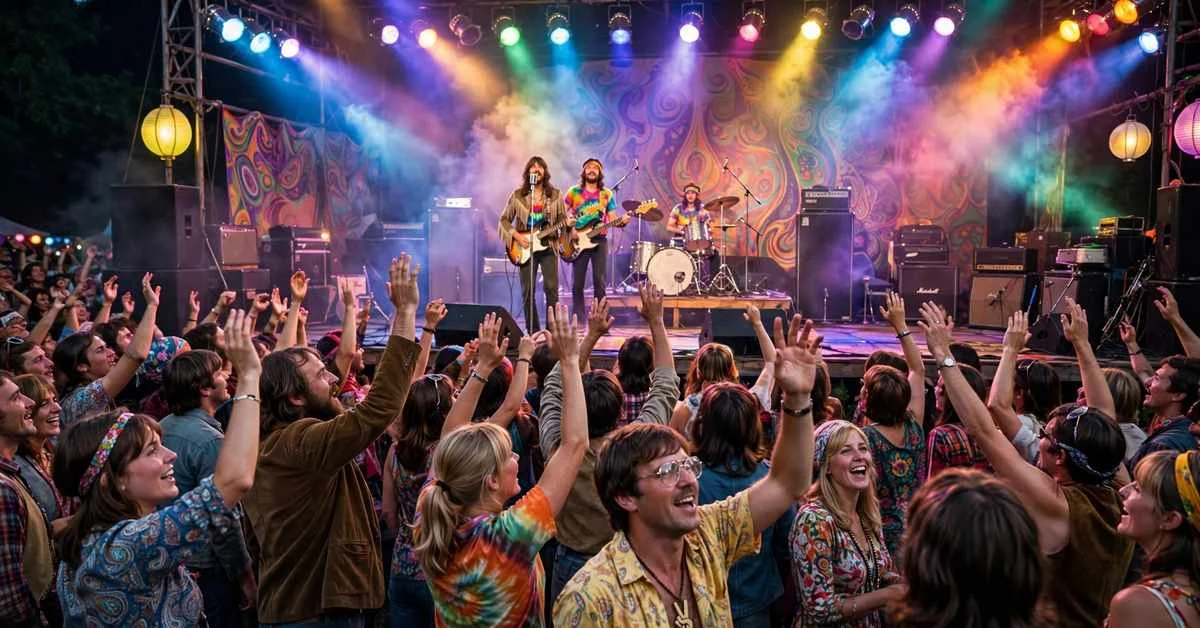
Far Out vs Groovy vs Outta Sight
The 1960s had three great approval words, and they were not identical. Groovy described a feeling of things being right, mellow and pleasant. Outta sight described something so good it left your field of vision. Far out described distance from the ordinary, with a cosmic edge the others lacked.
Think of it this way. A comfortable afternoon with friends is groovy. A guitar solo that melts your face is outta sight. A new idea about reality that keeps you up all night is far out. Each word covered different territory, and fluent speakers of hippie slang knew which one fit.
Far out also had a psychedelic connection the others did not. The phrase fit the era of expanding consciousness perfectly, when going far out could describe a state of mind as much as a reaction. The same decade that called a great party a gas needed a word for experiences that went further, and far out was it.
How to Say It Without Sounding Like a Costume
Can you still say far out today? Yes, but know the room. Said with a straight face to the wrong audience, it sounds like a Halloween costume. Said with warmth and a little irony among friends, it is charming. The trick is the same one that keeps any retro slang alive: own the reference.
It works best in moments of genuine surprise. A friend shows you something truly unexpected, and far out slips out naturally. Nobody will think you are doing an impression. They will hear the amazement, which is the part that never aged. Avoid it in formal settings, obviously. Your manager does not want to hear that the quarterly numbers are far out, unless your manager is very cool.
And if someone says it to you, understand the compliment. They are telling you that you went beyond the ordinary. In any decade, that is as solid an approval as based gets today.
Far Out FAQ
Do people still say far out? Sometimes, usually with irony or affection. It survives as a retro exclamation, and it still works in moments of real amazement.
What is the difference between far out and groovy? Groovy means mellow and pleasing. Far out means amazing or mind-blowing, often with a sense of going beyond normal limits. Far out is the stronger reaction.
Where did far out come from? Jazz culture. The Oxford English Dictionary cites a 1954 usage, and 1960s hippies adopted it from jazz slang into mainstream counterculture language.
Is far out a compliment? Yes. In all three of its classic uses, amazement, agreement, and praising originality, it is positive. Nobody ever said far out about something they disliked.
Conclusion
Far out earned its place as the hippie seal of approval because it did three jobs at once. It expressed wonder, signaled agreement, and praised the unconventional, all in two words. That is efficient slang, and efficiency is why some phrases outlive their decade.
The jazz musicians who coined it would recognize every use. The hippies who popularized it would approve of its survival. And anyone who hears something truly extraordinary today, in any era, already knows the feeling. Some reactions do not need new words. Far out still covers them perfectly.

I’m Ryan Hayes. On grammerzones.com, I write clear, no-nonsense guides to slang and everyday expressions. So the next time a word confuses you, you’ll find the answer here.