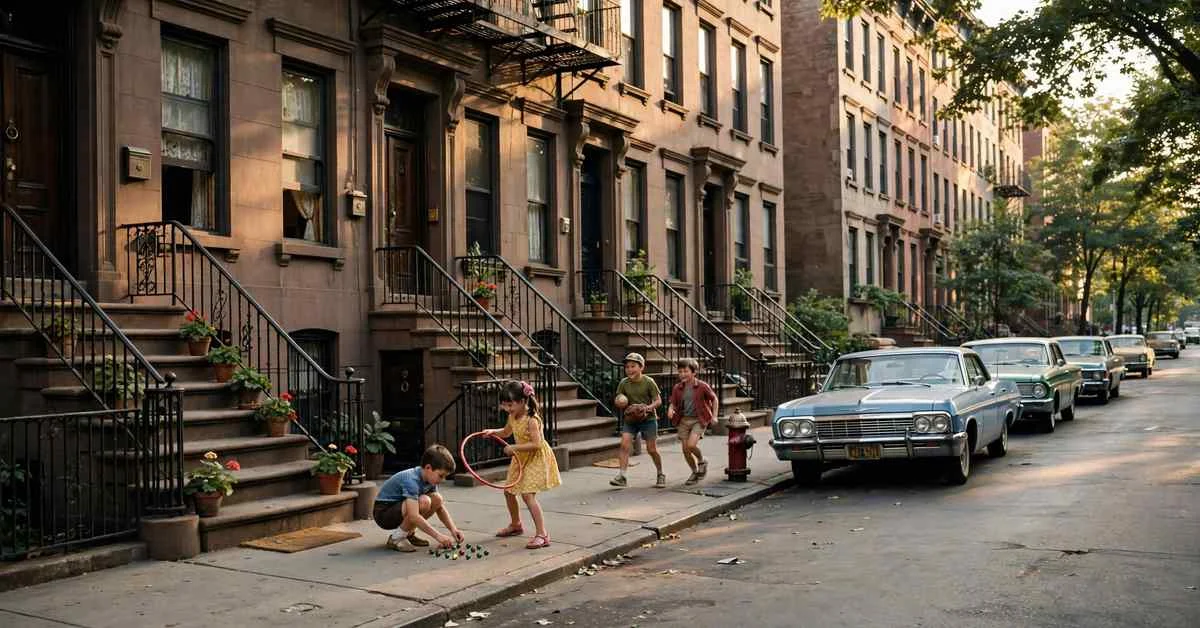
In 1960s slang, hood was short for neighborhood. It pointed to the streets you grew up on, the block that raised you, and the identity that came with it. Long before hip-hop turned the word into a global anthem, hood was already doing quiet work in American cities: naming home, pride, and belonging in a single syllable. The word carried a second, older meaning too: hood as a hoodlum, a troublemaker. One word, two lives, and the 1960s gave the neighborhood meaning its start.
Say the word today and most people hear music. They hear rap lyrics, block parties, and pride shouted through a microphone. But rewind to the 1960s and the word was smaller and closer to the ground. It lived on stoops and street corners. It was what kids called the few blocks they knew better than anywhere else on earth. Understanding hood in the 1960s means understanding a time before the word got famous, when it was just how people named home.
Two Words Wearing One Jacket
Hood has always been two words pretending to be one. The older one is hoodlum, a troublemaker or petty criminal. That meaning dates back to the 1920s, when hood got clipped from hoodlum the way people clip long words when they are in a hurry. A hood, in that sense, was someone you watched out for.
The newer one is neighborhood, clipped down to the hood in the 1960s. Dictionaries date this meaning to about 1965 to 1970. Same sound, completely different word. One describes a person. The other describes a place. Context did all the work of telling them apart.
This double life caused some confusion, and honestly it still does. If an old newspaper from 1968 mentions hoods on a street corner, you have to read carefully. Are those troublemakers, or just kids from the neighborhood hanging out. Usually the sentence around the word gives it away. But the overlap is not an accident. The two meanings grew up on the same streets, and they borrowed feeling from each other. The neighborhood meaning carried a little edge from the hoodlum meaning, and the hoodlum meaning carried a little home from the neighborhood one.
For this article, we are following the neighborhood meaning, because that is the one the 1960s invented. The hoodlum meaning was already old news by then.
The Neighborhood Becomes an Identity
Here is the thing that made the 1960s version of hood special. It was not just a shortcut for a long word. It was a claim. Saying the hood instead of the neighborhood changed the relationship between the speaker and the place. The neighborhood is where you live. The hood is who you are.
Think about how people talked. Nobody said I am going back to my neighborhood with their chest out. But the hood carried weight. It said these streets made me. It said I know every corner store, every shortcut, every face on the block. In cities going through huge changes in the 1960s, that kind of rootedness mattered. Neighborhoods were being reshaped by highways, by migration, by white flight to the suburbs. Naming your few blocks with a proud little word was a way of holding on.
The word also drew a circle. Inside the circle were your people. Outside were strangers. Kids learned early which blocks were theirs and which were not, and the word marked the boundary. It was geography with feelings attached.
This is the angle most people miss when they hear the word today. Hip-hop made hood loud and global, but the 1960s made it personal. Before it was an anthem, it was an address. Before it was shouted on stage, it was said quietly on a stoop, and it meant home.
Why Shorten a Perfectly Good Word
Neighborhood is a fine word. So why did the 1960s chop it in half. The answer is simple: street language loves speed. Long words slow down a sentence, and on the street, sentences move fast. Hood does the same job in one beat that neighborhood does in four. When you say it out loud, you can feel the difference. The long word sounds like a city planner. The short word sounds like someone who actually lives there.
Shortening also changes who owns a word. Official words belong to everyone. Shortened words belong to the people who use them. When kids in the 1960s said the hood, they were taking a plain English word and making it theirs. It was a small act of language rebellion, the kind every generation performs without thinking about it.
The same instinct gave us plenty of other clipped words. It is how people talk when they are comfortable, when they are among their own. You do not use the full formal version with your friends. You use the short one, because the short one says we are close enough to skip the extra syllables.
That is the hidden story of hood. It is not just about saving time. It is about who gets to name a place: the mapmakers, or the people on the block.
The 60s Hood vs the Hip-Hop Hood
The hood of the 1960s and the hood of hip-hop share a word, but they are not the same animal. Knowing the difference keeps you from mixing up two eras.
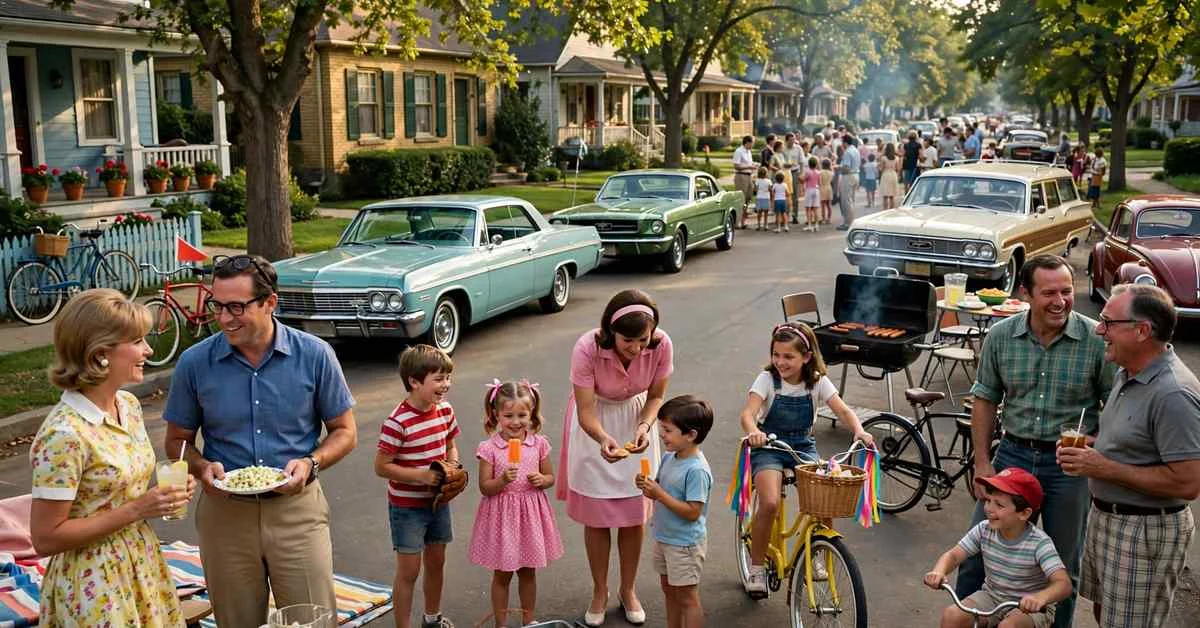
The 1960s version was local and low-key. It described a specific few blocks. It was pride without performance. Nobody was trying to impress anyone by saying it. It was just the word people used, the way you might say my street today. The feeling was closer to hometown pride than to anything dramatic.
The hip-hop version, starting in the late 1970s and exploding in the 1980s and 1990s, turned the word up to full volume. It became a badge of survival, a statement about where you came from and what it cost. Rappers made it mythic. The word started carrying stories of struggle, loyalty, and making it out. It went from naming a place to naming an experience.
Neither version is wrong. Words grow, and hood grew up. But if you use the hip-hop meaning to read a 1960s conversation, you will hear drama that was not there yet. The 1960s hood was quieter. It was a kid pointing down the street and saying that is mine. The volume came later.
This is worth remembering whenever old slang meets new ears. The word is the same. The world around it changed.
How the Word Traveled
Hood started in American cities, and for a while it stayed there. It moved the way all street language moves: from block to block, from city to city, carried by people. By the late 1960s, the neighborhood meaning was established enough for dictionaries to notice, which is usually the last stop on the journey of a slang word, not the first.
The 1970s gave it new vehicles. Music, film, and television started picking up street language and broadcasting it. Each appearance carried the word a little further from its original blocks. People who had never set foot in the neighborhoods where it was born started using it, sometimes correctly and sometimes not.
Then hip-hop did what hip-hop does: it took the word global. By the 1990s, kids on other continents were saying the hood about their own neighborhoods. The word had officially outgrown its birthplace. That is the normal life cycle of great slang. It starts as an inside word, becomes a city word, becomes a country word, and ends up belonging to everyone.
The 1960s version is still in there, though, under all the layers. Every time someone says the hood with real love for their streets, they are echoing those kids on the stoops, pointing down the block and naming home.
Using Hood Without Sounding Lost
If you want to use hood with a 1960s flavor, keep it simple and specific. The 1960s usage was about a real place, not a vibe. It worked best with the word the in front of it: the hood, meaning the neighborhood we are talking about.
A few guidelines keep you on solid ground. First, mean a place, not a costume. The word points to streets, not to an attitude you are trying on. Second, remember the hoodlum twin. In writing about the 1960s, make it clear which hood you mean, because readers might hear the other one. Third, do not force it. The word worked in the 1960s because it was natural. Dropped into a random sentence today, it sounds like a quote, not a word.
The safest move is to let the word do historical work. Writing about the era, describing a character, or explaining the roots of modern slang: those are perfect homes for it. It is a word with a past, and it shines brightest when you let that past show.
Hood FAQ
What did hood mean in the 1960s. It was short for neighborhood, usually with the word the in front of it. It named the streets and blocks where someone grew up, with a feeling of identity and pride.
Is hood short for hoodlum or neighborhood. Both, which is the fun part. The hoodlum meaning is older, from the 1920s. The neighborhood meaning started in the 1960s. Context tells them apart.
Did hip-hop invent the word hood. No. Hip-hop made it famous worldwide, but the neighborhood meaning was already in use in the 1960s, years before hip-hop existed.
When did the neighborhood meaning start. Dictionaries date it to about 1965 to 1970, right in the heart of the decade.
Can I still use hood this way. You can, but most people today will hear the hip-hop meaning. If you want the 1960s flavor, set the scene clearly so readers follow you back in time.
Home in a Single Syllable
The 1960s gave hood its second life, and it was the more important one. Before the decade, hood mostly meant a troublemaker. After it, hood could mean home. That shift happened because ordinary people on ordinary blocks took a long word, cut it down, and filled it with feeling.
Hip-hop would later take the word around the world, and that is a great story too. But the first chapter belongs to the 1960s, to the stoops and street corners where the word was just a way of saying mine. Every anthem starts as a whisper. The hood started as kids naming the few blocks they loved, one short syllable at a time.

I’m Riley Spencer. I track down the latest slang, memes, and viral phrases for grammerzones.com, explaining what they mean and how people actually use them, in plain simple words.