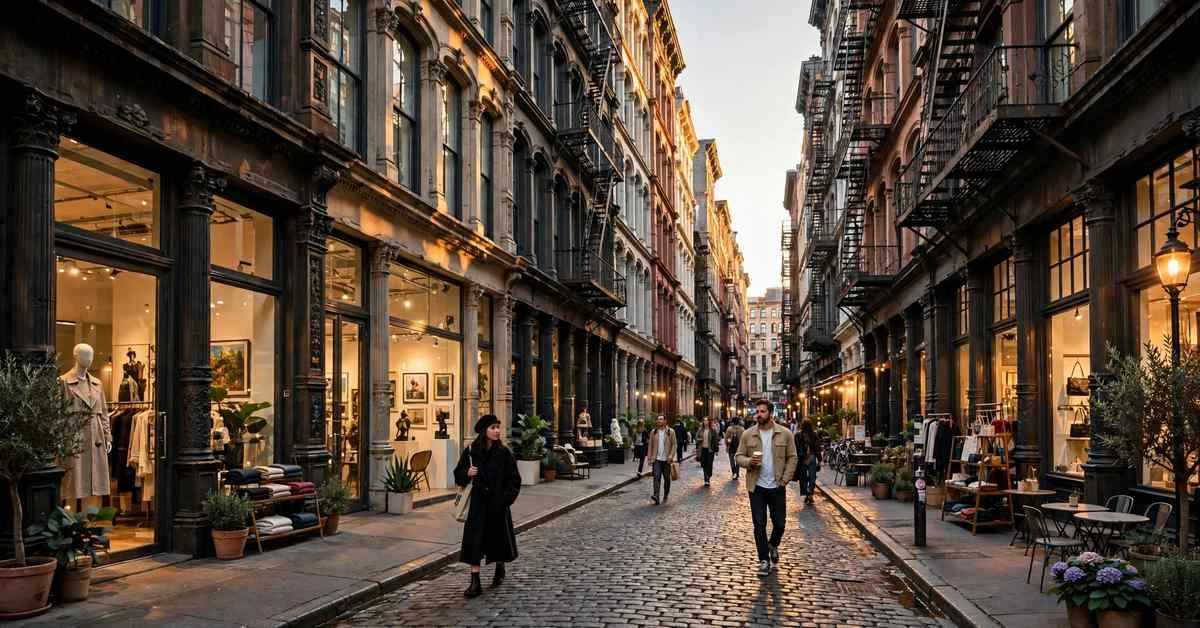
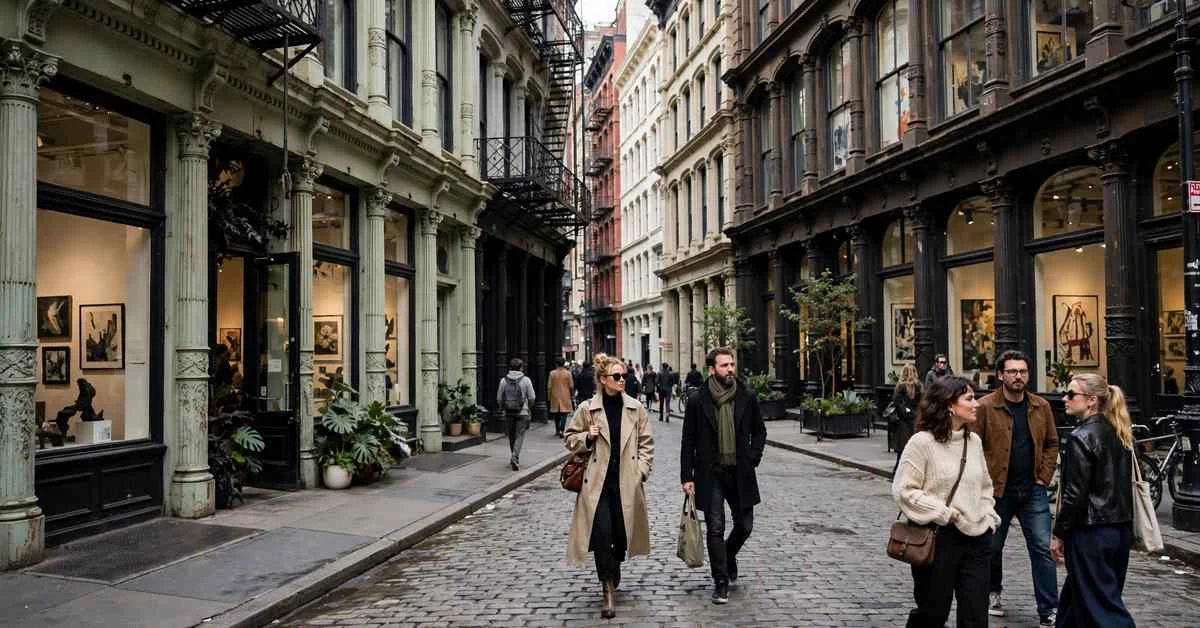
Soho slang meaning boils down to this: it is shorthand for a trendy, artsy city district. Say soho and most people picture cast-iron lofts, gallery windows, and streets packed with shoppers carrying too many bags. The name itself is a code. In New York it stands for South of Houston Street. In London it marks a buzzing West End quarter. In both cities a simple place name turned into a full vibe. When someone says a spot has soho energy, they mean creative, expensive, and cool all at once. This guide walks through the famous sohos, the wild history behind them, and how the word became a template for naming hip neighborhoods everywhere.
Three Cities, One Name
Most people think soho belongs to one city. It belongs to at least three. New York has SoHo, with the capital H, short for South of Houston Street in Lower Manhattan. London has Soho, one square mile in the West End, bounded by Oxford Street, Regent Street, Shaftesbury Avenue, and Charing Cross Road. Hong Kong has SoHo too, short for South of Hollywood Road, a strip known for bars and restaurants.
Each one earned the name on its own. None of them copied the others at first. New York got its name from a street grid. London had its name for centuries before New York used the trick. Hong Kong borrowed the formula later. What ties them together is not the spelling. It is the reputation. Every soho became known as the place where the interesting people go after dark.
That shared reputation is why the word works as slang. You do not need to name the city. Say soho and the listener fills in the rest: nightlife, art, food, crowds, and prices that make your wallet nervous.
From Cast Iron to Cashmere
New York SoHo has the wildest backstory of the three. In the mid-1800s the area was the most prominent red-light district in the city. Guidebooks of the era pointed gentlemen toward its side streets. When that chapter closed, factories moved in, and the district earned a new nickname: the Cast Iron District, for its ornate cast-iron building fronts.
By the 1960s and 1970s the factories were empty and artists moved into the huge cheap lofts. For a while SoHo was the capital of downtown art. Galleries filled the ground floors. Then the classic plot twist arrived. The artists made the area cool, cool attracted money, and money pushed the artists out. Today SoHo is famous for destination shopping, from global chains to luxury labels, plus a downtown scene that draws tourists by the thousand.
London Soho followed a similar arc on a different timeline. It was once known as the red-light district, famous for its sex shops. Bit by bit the clubs, restaurants, and creative firms took over. Now it is better known for dinner and drinks than for its old reputation. Both sohos prove the same rule: edge comes first, money comes second, and the name keeps the edge long after the edge is gone.
The Naming Virus
SoHo did something no neighborhood had done before. It became a naming template. Once people saw how a zippy acronym could rebrand a district, the formula spread across New York like a bougie renovation project. NoHo means North of Houston Street. TriBeCa means Triangle Below Canal Street. NoLIta means North of Little Italy. DUMBO means Down Under the Manhattan Bridge Overpass.
Real estate agents loved the trick because a fresh name can make an old block sound hip overnight. Longtime residents had mixed feelings. A new name can erase history as fast as it creates buzz. But the pattern stuck because it works as social code. Knowing the nickname marks you as an insider. Having to ask what it stands for marks you as a visitor. That insider test is pure slang behavior, and soho started it.
How People Use Soho in Conversation
In everyday talk soho works as an adjective more than a place. A friend might say a new cafe has real soho energy, meaning stylish and a little pricey. A traveler might call some district the soho of its city, meaning the artsy nightlife quarter. A local might complain about soho prices, meaning the kind of menu where coffee costs as much as lunch.
The word also travels as a warning label. Saying an area went full soho usually means it got trendy, then expensive, then full of tourists. Artists hear that sentence and start packing. Nobody wants to admit their favorite block is next, but tbh, every cool neighborhood lives under the same threat.
You can also flip it into a compliment. Calling a person soho means they dress sharp, know the good spots, and move through the city like they own a gallery. Just be ready for the bill. Nothing about the soho lifestyle comes cheap, and stunting in those streets is practically a local sport.
Frequently Asked Questions
What does soho stand for? In New York it stands for South of Houston Street. In Hong Kong it stands for South of Hollywood Road. London Soho does not stand for anything. It is simply the historic name of the district.
Is soho the same in London and New York? No. They are different places with different histories. London Soho is a centuries-old West End quarter. New York SoHo is a Lower Manhattan neighborhood named with an acronym. Both are known for nightlife and culture, which is why people mix them up.
Why is soho so expensive now? The classic gentrification cycle. Artists moved in for cheap space, made the area desirable, and rising rents followed. Luxury retail and tourism finished the job. The edge that made it cool is mostly a memory now.
Can I use soho to describe my own city? Yes, and people do it all the time. Calling a district the soho of your city is a quick way to say it is the artsy, pricey, nightlife-heavy part of town. Everyone will know what you mean.
Conclusion
Soho started as a street address and ended up as a feeling. Three cities gave the name three different histories, but all of them landed in the same place: the district where art, nightlife, and high prices collide. New York added the acronym trick, and that trick went viral, spawning a whole family of neighborhood nicknames. Today you can use soho without naming a city at all. It works as shorthand for trendy, creative, and expensive, anywhere on the map. Just remember the lesson buried in the name. Every soho was cheap once. The artists always arrive first, and the boutiques always arrive last.

I’m Riley Spencer. I track down the latest slang, memes, and viral phrases for grammerzones.com, explaining what they mean and how people actually use them, in plain simple words.