You’re scrolling through a Snapchat reply or a TikTok comment, and there it is: yhu. Not you, not u yhu. For a second, you wonder if you’re missing something. A new abbreviation, maybe. A subtle signal. Something Gen Z invented that everyone else missed the memo on.
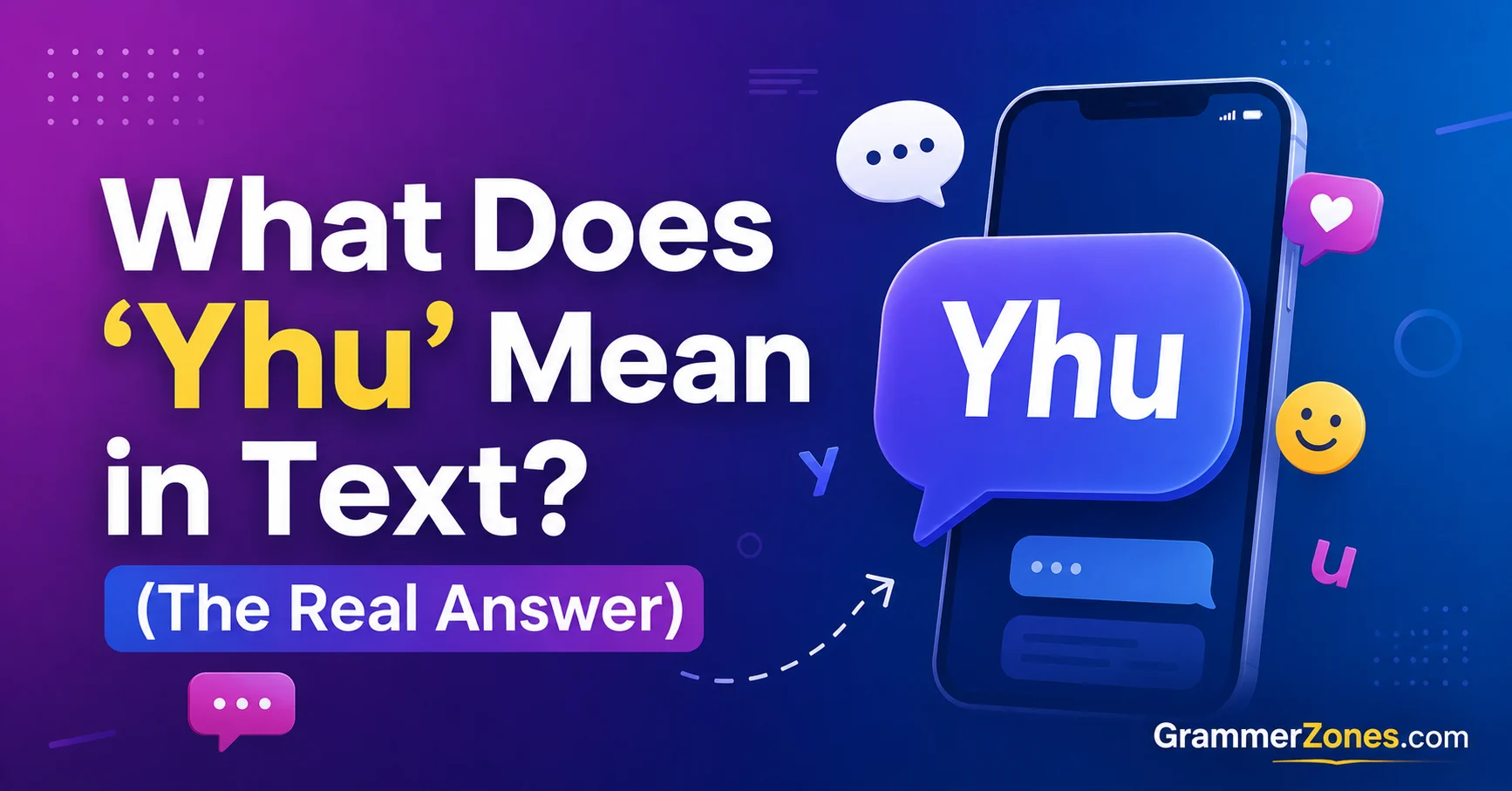
Here’s the short version: you’re not missing anything. Yhu is a spelling variation of you, part of a much bigger pattern in how people write casually online stretching, softening, or restyling ordinary words to match the tone of a conversation.
It shows up constantly in DMs, comment sections, and group chats, which is exactly why so many people stop mid-scroll and search for what it actually means.
What follows is a full breakdown: where the word came from, how its meaning shifts slightly depending on the platform and the person typing it, what it isn’t (despite a few persistent myths), and how to respond when someone sends it to you. By the end, you won’t just know the definition, you’ll understand why it exists in the first place.
The Meaning, in Plain Terms
Yhu is a phonetic restyling of you. Say it out loud, and it sounds identical. The extra letters don’t change pronunciation, they change feel. This is the same principle behind writing heyyy instead of hey or sooo instead of so: adding a little visual weight to a word makes it read as warmer, more casual, or more emphatic than its plain-spelled counterpart.
It sits in a small family of pronoun spellings that includes u, yu, and the more exaggerated yhuu. All of them do the same basic job they replace you but they carry slightly different tonal weight. U feels efficient and a little flat. Yhu feels more deliberate, almost playful, like the person typing it cared enough to add the extra letter.
One quick distinction worth clearing up: yhu is not the same as yh. That second one is short for yeah, used to agree with something (yh, I’ll be there at 6). They look similar and get typed quickly, so it’s an easy mix-up but grammatically they’re doing completely different jobs. One’s a pronoun. The other’s a nod of agreement.
Beyond texting culture, the word has no other established definition. It isn’t a scientific term, a medical abbreviation, or an aviation code if you’ve stumbled across YHU in a technical document, it’s almost certainly an unrelated acronym specific to that field, not connected to the slang usage at all. For nearly everyone typing this into a search bar, the answer they’re looking for is the texting one.
Where This Kind of Spelling Comes From
Stylized texting isn’t new, it’s just evolved. Back when SMS messages were capped at 160 characters and phone keypads required multiple taps per letter, people shortened everything they could. You became u. Are became r. Speed was the whole point.
Smartphones removed those constraints, but the habit of playing with spelling didn’t disappear; it changed direction. Instead of shrinking words down, a lot of casual texting now stretches them out. Extra letters, repeated vowels, softened spellings: these choices aren’t about saving keystrokes anymore. They’re about tone. A word like yhu carries a different emotional register than you, even though they mean exactly the same thing.
This shift tracks closely with how conversation moved from private texting into public, performative spaces, comment sections, captions, story replies. When TikTok and Snapchat became primary places people talk, the way they typed started reflecting personality, not just efficiency. A stylized word can signal you’re relaxed, on trend, or speaking in a specific social register the same way tone of voice does out loud.
How the Meaning Shifts by Platform
The core definition of yhu doesn’t change from app to app but the feel of it does, because every platform has its own texting rhythm.
In everyday chat and texting, yhu tend to show up in low-stakes, comfortable exchanges where yhu at, ily yhu, that kind of thing. It reads as familiar, like a verbal shorthand between people who already have some rapport.
On Snapchat, quick replies favor speed and casualness over correctness, so yhu fits right in. It’s common in chat threads attached to snaps, where the tone is inherently informal and a little playful.
On TikTok, it shows up mostly in comments and captions, where stylized spelling doubles as a way of matching the platform’s fast, expressive voice. A comment written in standard grammar can almost feel too formal in that context.
On Instagram, it’s most common in DMs and comment replies again, functioning as a softer, more casual you, particularly in flirtier or friendlier exchanges.
WhatsApp is a slightly different case. Because WhatsApp conversations often blend casual chat with more logistical or family-group messaging, yhu appears less consistently there than on Snapchat or TikTok but when it does show up, it’s almost always in one-on-one chats between younger users, carrying the same casual tone as everywhere else.
Does It Mean Something Different From a Guy vs. a Girl?
Short answer: no not on its own. This is one of the more common points of confusion, and it’s worth addressing directly, because the underlying question people are really asking is usually does this text mean they like me?
The word itself is gender-neutral and carries no built-in romantic or platonic charge. What actually signals intent is everything around the word the rest of the sentence, how quickly someone replies, if it’s paired with compliments or emojis, and the history between the two people texting. Miss yhu from someone you’ve been flirting with for weeks reads very differently than yhu good? from a coworker. The spelling isn’t the clue. The context is.
Clearing Up a Few Myths
A handful of misconceptions tend to follow this word around, so it’s worth setting the record straight:
It’s not a coded message. There’s no hidden layer of meaning beneath the spelling; it’s stylistic, not symbolic.
It’s not new. The instinct to restyle common words has been part of texting culture for well over a decade; yhu is simply the current iteration.
It’s not exclusive to one platform. While it might feel most associated with TikTok or Snapchat right now, it appears just as often in plain text messages and other apps.
And it’s not a grammar mistake worth correcting. In casual digital conversation, spelling flexibility is the norm, not an error treating it as one usually just signals that you’re reading the room differently than the person typing it.
How to Respond to It
There’s genuinely no special protocol here. If someone sends you yhu, the most natural move is to match their tone rather than overthink the spelling. A relaxed reply haha yhu too, or just continuing the conversation normally works fine. Trying to decode the word usually says more about overanalyzing the message than the word itself warrants. Save that energy for reading the actual context of the conversation, not the spelling choice.
Why It Matters in Dating Apps and Flirty Conversations
This is where the word tends to get overanalyzed the most. In a flirtier context dating apps, late-night texting, the early stages of a situationship a stylized spelling can feel like it’s carrying more emotional weight than it technically is. I miss yhu does read softer than I miss you, and that’s not imagined; small stylistic choices genuinely do shape tone, even subconsciously.
But it’s worth keeping perspective: the spelling amplifies whatever’s already there. It doesn’t create interest out of nothing, and it doesn’t downgrade it either. If someone’s been warm and engaged in a conversation, a stylized yhu is just an extension of that warmth. If the conversation has been flat, the spelling alone won’t change that. Read the pattern of the conversation, not a single word choice.
Conclusion
At its core, yhu is a small, low-stakes piece of internet language, a stylized version of you that’s spread across texting, Snapchat, TikTok, and Instagram because it fits the casual, expressive way people communicate online now.
It doesn’t carry a secret meaning, and it doesn’t work differently depending on who sends it. What changes is the tone of the conversation around it, not the word itself.
If you take one thing away from this: don’t overanalyze the spelling. Pay attention to the conversation it’s part of instead. Language like this will keep shifting and new spellings will replace this one eventually, the same way yhu followed up but the underlying habit stays the same. People aren’t just choosing words online; they’re choosing how those words feel. Understanding that makes every text a little easier to read, without needing to search for what it means.
Discover More About
Wan Slang Meaning Explained: From Texting to WAN Networking
What Does Asab Mean? The Real Answer (Not What You Think)
What Is Stoke? Slang Meaning, Origin & How to Use It Right

I’m Andrew West, a content writer at GrammerZones.com, specializing in high-ranking grammar blogs and modern language trends. I simplify complex grammar and decode Gen Z and Gen Alpha slang to make communication clear, relevant, and engaging.